
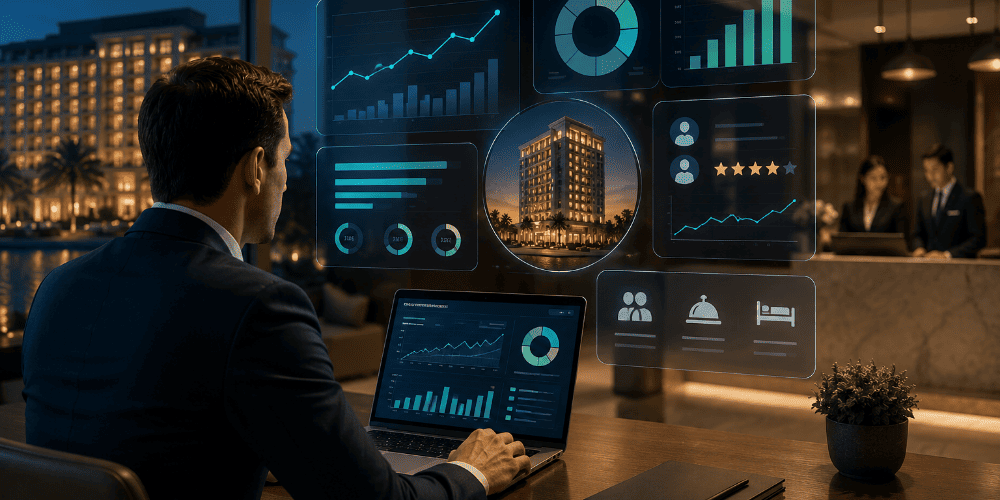
Discover how AI in hotel industry helps managers make faster decisions with real-time insights on revenue, occupancy, KPIs, and property performance.
As hotel operations become increasingly data-driven, managers must make decisions based on revenue, occupancy, guest behavior, and operational performance. Yet gathering and analyzing information from multiple systems can be time-consuming and inefficient.
AI in hotel industry helps solve this challenge by transforming operational data into real-time insights, enabling hotel leaders to make faster, smarter decisions and respond more effectively to changing business conditions.
Why Traditional Hotel Management Often Slows Down Decision-Making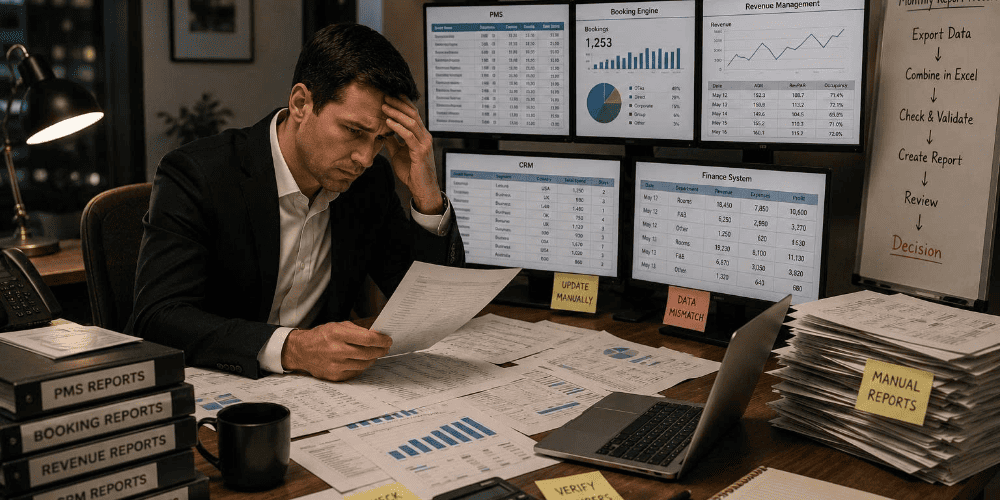
Traditional Hotel Reporting And Performance Analysis (Source: Internet)
Most hotels rely on multiple systems to manage operations, including PMS platforms, booking engines, CRM systems, revenue management tools, and financial software. While these systems generate valuable information, they often operate independently, creating data silos across the organization.
As a result, managers frequently spend hours gathering reports, comparing spreadsheets, and validating information before they can understand what is happening within the business. Data is spread across multiple systems, reporting processes are often manual, information may already be outdated by the time it is reviewed, and managers spend more time finding answers than acting on them.
In a highly competitive hospitality environment, delayed decisions can lead to missed revenue opportunities, inefficient resource allocation, and slower responses to changing market conditions. These challenges highlight why AI in hotel industry is becoming an increasingly important tool for modern hotel management.
How AI Transforms Hotel Decision-Making
One of the biggest advantages of AI in hotel industry is its ability to turn large volumes of operational data into real-time decision support. Unlike traditional reporting tools, AI does more than collect and display data. It continuously analyzes information from multiple sources, identifies patterns, and delivers insights that help managers act faster. This allows hotel teams to move from reactive decision-making to a more proactive and informed approach.
Rather than waiting for end-of-day reports or manually reviewing dashboards, managers can access real-time information whenever they need it. AI can automatically highlight performance trends, detect unusual changes, and surface critical insights that require immediate attention. As a result, hotel leaders can make decisions based on current conditions instead of outdated reports.
AI supports hotel decision-making in several key areas:
1. Real-Time Revenue Monitoring
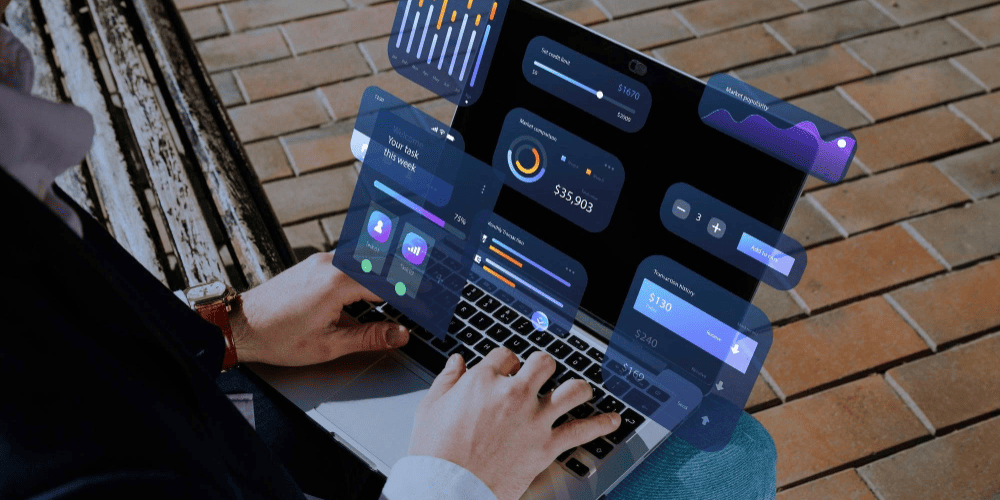
Hotel Manager Tracking Revenue And Financial Performance With AI (Source: Internet)
Revenue is one of the most important indicators of hotel performance, and AI in hotel industry is helping managers monitor it more effectively than ever before. Yet many managers still rely on periodic reports to evaluate financial results. This often creates a delay between identifying a trend and taking action, especially in a fast-moving hospitality environment.
AI enables continuous revenue monitoring by analyzing transactions, reservations, and departmental performance in real time. Instead of waiting for reports to be generated, managers can instantly understand today’s revenue performance, track progress toward monthly targets, and compare current results with previous periods.
AI can also provide deeper visibility into revenue contribution across different departments, helping hotel leaders identify which areas are driving growth and which may require additional attention. With access to up-to-date information, managers can respond more quickly to changing business conditions and make decisions with greater confidence.
2. Occupancy and Booking Trend Analysis

Hotel Booking Trend Analysis For Better Demand Forecasting (Source: Internet)
Occupancy and booking trends influence nearly every aspect of hotel operations, from pricing strategies to staffing decisions. AI continuously analyzes reservation data to identify patterns that may not be visible through traditional reporting methods, helping managers gain a clearer understanding of changing demand and booking behavior.
For example, AI can detect:
- Changes in booking pace: Identify whether reservations are accelerating or slowing down compared to previous periods, allowing managers to adjust pricing and marketing strategies accordingly.
- Seasonal demand shifts: Recognize recurring demand patterns throughout the year and help hotels prepare for peak and off-peak periods more effectively.
- Cancellation trends: Monitor changes in cancellation behavior to reduce revenue risks and improve forecasting accuracy.
- Occupancy fluctuations: Track unexpected changes in occupancy rates and provide early warnings when performance deviates from expectations.
- Emerging market opportunities: Uncover new customer segments, travel trends, or booking sources that may contribute to future growth.
By identifying these trends early, managers can make proactive decisions that improve both operational efficiency and revenue performance.
3. KPI and Performance Tracking
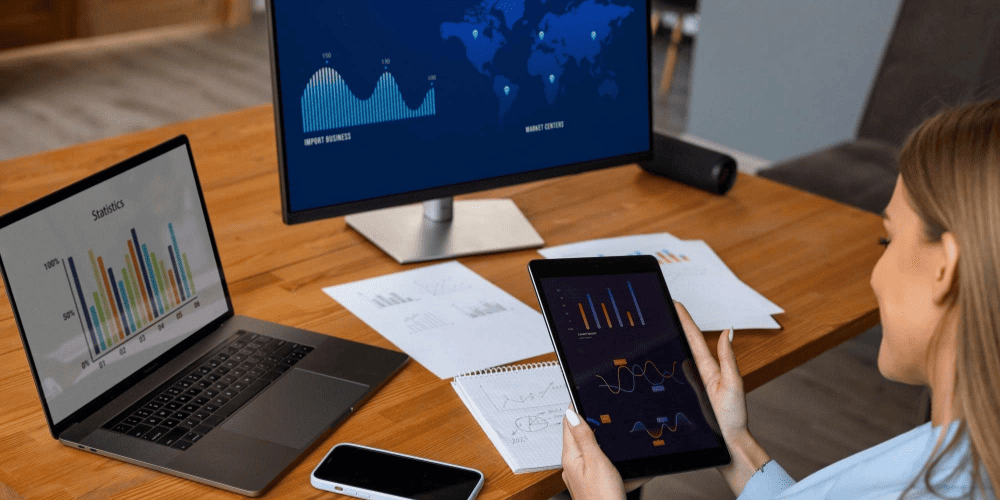
Hotel Managers Monitoring Business Performance Through AI Analytics (Source: Internet)
Hotels rely on a wide range of KPIs to measure success, and AI in hotel industry simplifies the process of tracking and analyzing these metrics. AI simplifies performance tracking by automatically monitoring critical metrics across different departments and providing a centralized view of hotel performance.
AI automatically tracks metrics such as:
- Revenue targets: Measure progress against financial goals and quickly identify performance gaps.
- Occupancy rates: Monitor room utilization levels and understand how effectively inventory is being managed.
- ADR (Average Daily Rate): Track average room pricing performance and evaluate pricing strategy effectiveness.
- RevPAR (Revenue Per Available Room): Assess overall revenue efficiency by combining occupancy and pricing performance into a single metric.
- Guest satisfaction scores: Monitor guest feedback and satisfaction trends to identify service improvement opportunities.
- Department performance indicators: Evaluate how different departments contribute to overall business results and operational efficiency.
Rather than reviewing multiple reports, managers receive a consolidated view of performance and can quickly identify areas that require attention.
4. Multi-Property Performance Comparison
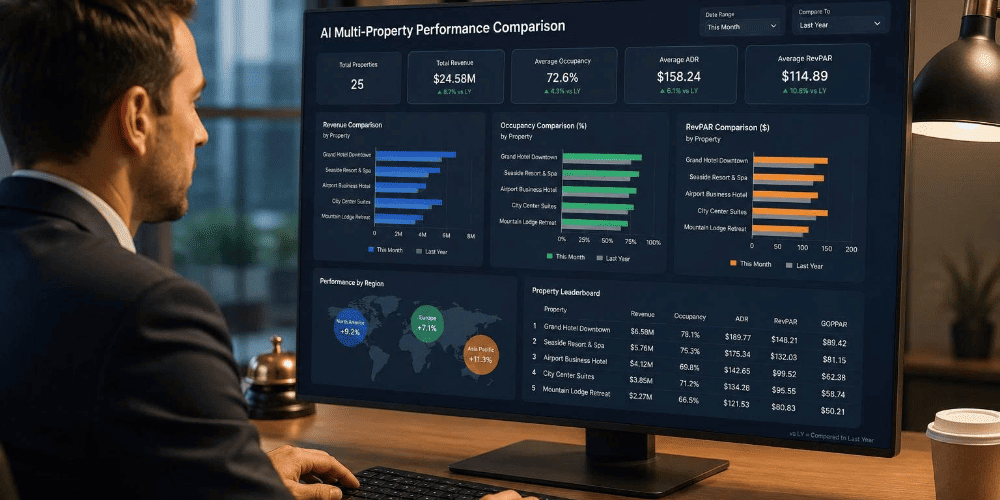
Comparing Hotel Revenue Occupancy And Performance Across Properties (Source: Internet)
For hotel groups and chains, AI in hotel industry provides a scalable way to compare performance across multiple properties. Traditional comparison processes often involve collecting reports from multiple locations and manually analyzing the results, which can be time-consuming and difficult to scale.
AI automates this process by consolidating performance data across properties and highlighting meaningful differences. Managers can quickly identify:
- Top-performing properties: Discover which locations consistently achieve strong revenue, occupancy, or guest satisfaction results.
- Underperforming locations: Identify properties that require additional support, operational improvements, or strategic adjustments.
- Regional performance trends: Compare results across different markets to understand geographic opportunities and challenges.
- Revenue and occupancy comparisons: Evaluate how properties perform against one another and identify factors driving success.
- Operational efficiency differences: Analyze variations in staffing, productivity, and resource utilization across locations.
This visibility helps leadership teams make faster decisions regarding resource allocation, investments, and performance improvement initiatives. By understanding why certain properties outperform others, hotel groups can replicate successful strategies across their portfolio and address operational challenges more effectively.
Key Benefits of AI-Driven Decision Making in Hotels
Faster Access to Business Insights
This is one of the most immediate benefits of implementing AI in hotel industry. AI eliminates much of the manual effort required to gather and analyze information, enabling managers to access insights instantly. This speed is especially valuable in hospitality, where market conditions can change quickly and timely action often makes the difference between strong and weak performance.
Improved Operational Visibility
By consolidating data from multiple systems, AI provides a more complete view of hotel performance. Managers can see how revenue, occupancy, guest satisfaction, and departmental results connect, which leads to better understanding and stronger coordination across the business.
More Proactive Management
Real-time monitoring allows managers to identify issues and opportunities before they significantly impact business results. Instead of reacting after problems have already affected performance, hotel teams can take action earlier and manage operations more effectively.
Better Strategic Decisions
As AI in hotel industry continues to improve forecasting and analytics capabilities, strategic planning becomes more data-driven and accurate. With faster access to accurate information, hotel leaders can make decisions with greater confidence and precision. Whether they are adjusting pricing, planning staffing, or evaluating property performance, AI helps ensure those decisions are based on current data rather than assumptions.
The Future of AI-Driven Hotel Management
The future of AI in hotel industry points toward increasingly intelligent, automated, and proactive hotel operations. Instead of relying on static reports and manual analysis, managers can access real-time insights, identify trends faster, and make informed decisions with greater confidence.
The shift from traditional dashboards to AI-powered decision support will help hotels respond more quickly to changing market conditions and improve overall business performance.
Conclusion
AI in hotel industry is transforming how managers access information and make decisions. By providing real-time visibility into revenue, occupancy, KPIs, and property performance, AI helps hotel leaders move beyond manual reporting and respond faster to business opportunities and challenges.
As competition continues to grow, hotels that leverage AI-driven insights will be better positioned to improve efficiency, optimize performance, and stay ahead in an increasingly data-driven hospitality landscape.
Explore Lifesup AI and see how intelligent decision-making can drive better hotel performance.
>>Read more: 5 Applications of AI Transforming Hospitality and Their Core Benefits