
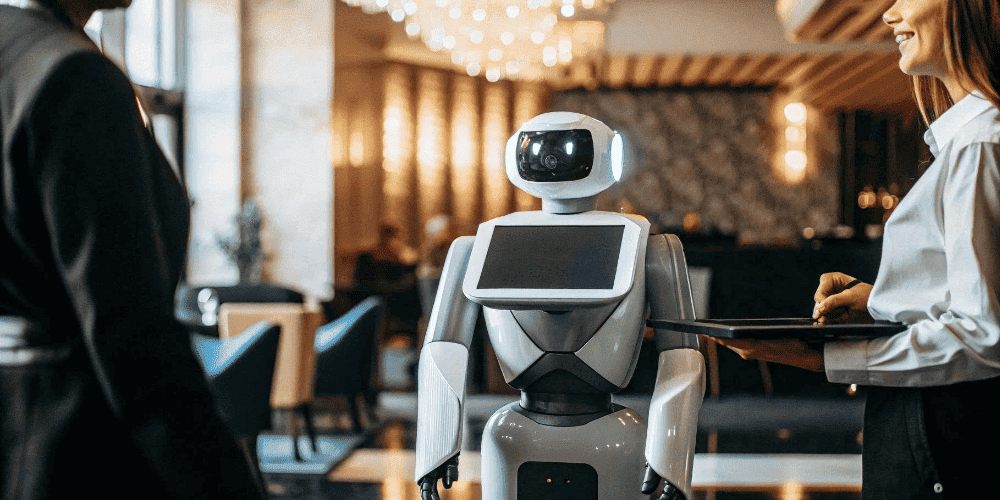
Discover how AI in hotel industry is helping hotels increase revenue, personalize guest experiences, automate operations, and improve efficiency. Explore key applications and benefits.
AI in hotel industry is helping hotels improve guest experiences, streamline operations, and increase revenue. From intelligent pricing systems to personalized recommendations and automation tools, AI for hotels is becoming an essential part of modern hospitality.In this article, we’ll explore six key applications of AI in hotel industry and the core benefits they deliver.
Applications of AI in Hotel Industry
Revenue Management and Dynamic Pricing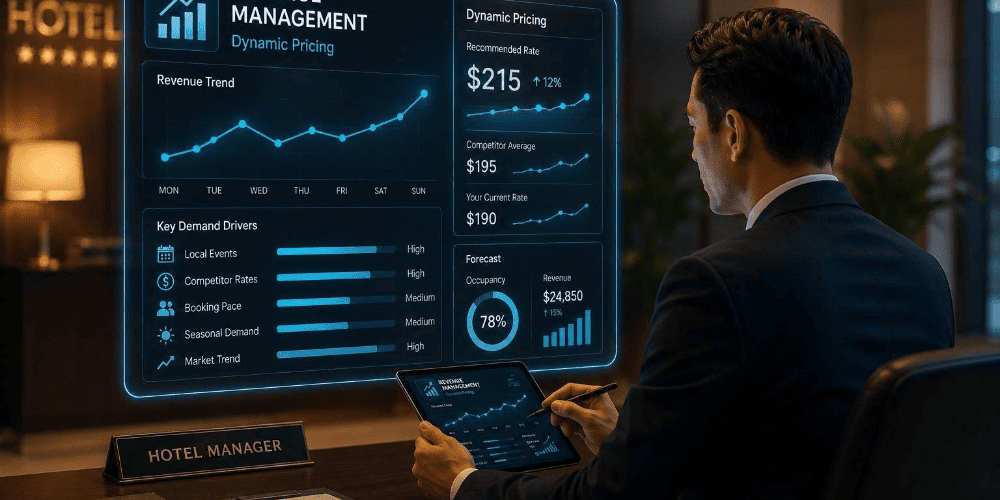
Revenue management is one of the most impactful applications of AI in hotel industry. Traditionally, pricing decisions relied heavily on manual analysis and historical data, making it difficult to react quickly to changing market conditions. Today, hotel revenue management AI systems can process vast amounts of information in real time, helping hotels maximize profitability while maintaining competitive room rates.
AI-powered systems analyze multiple factors simultaneously, including:
- Booking trends: AI identifies reservation patterns and demand fluctuations to support more accurate pricing decisions.
- Competitor pricing: The system continuously monitors competitor rates and helps hotels remain competitive in the market.
- Seasonal demand: AI recognizes peak and low-demand periods, allowing hotels to adjust pricing strategies accordingly.
- Local events: Conferences, festivals, and major events can significantly impact demand, and AI incorporates these factors into forecasts.
- Market condition: Economic trends and travel behavior are analyzed to improve pricing accuracy and revenue optimization.
By evaluating these variables continuously, AI can identify pricing opportunities that would be difficult and time-consuming for revenue managers to detect manually. Based on these insights, room rates can be automatically adjusted to maximize occupancy and revenue. As a result, hotels can respond faster to market changes, improve forecasting accuracy, and increase overall revenue performance.
AI Chatbots and Virtual Assistants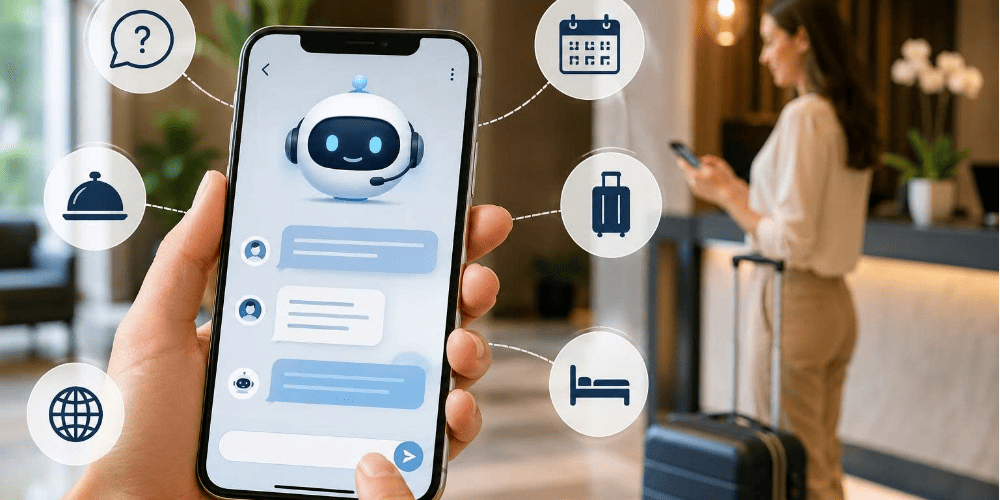
Providing fast and reliable customer support has become essential in hospitality. An AI chatbot for hotels allows guests to receive instant assistance across websites, mobile apps, messaging platforms, and social media channels.
These intelligent assistants can:
- Answer frequently asked questions: Guests can quickly receive information about amenities, policies, and services without waiting for staff assistance.
- Assist with reservations: Chatbots can guide users through the booking process and help reduce booking friction.
- Provide check-in and check-out information: Guests can access important arrival and departure details instantly.
- Recommend hotel services: AI can suggest dining options, spa treatments, or other services based on guest preferences.
- Support multiple languages: Multilingual capabilities help hotels serve international travelers more effectively.
Unlike traditional rule-based chatbots, modern AI assistants can understand natural language and engage in more human-like conversations. This improves response accuracy, creates smoother guest interactions, and enhances overall satisfaction. As customer expectations continue to evolve, AI-powered chatbots are becoming one of the most widely adopted applications of AI in hospitality industry operations.
Personalized Guest Experiences
One of the most valuable advantages of AI in hotel industry is its ability to deliver highly personalized guest experiences. Modern travelers increasingly expect hotels to understand their preferences and provide relevant recommendations throughout their journey.
AI can analyze:
- Booking history: Previous reservations help hotels understand guest preferences and travel habits.
- Spending patterns: Purchase behavior reveals opportunities for personalized offers and upselling.
- Previous stay preferences: Room choices, amenities, and service requests can be used to tailor future stays.
- Website interactions: Browsing behavior provides insights into guest interests before booking.
- Loyalty program activity: Membership data helps hotels create targeted rewards and personalized promotions.
Using these insights, hotels can recommend preferred room types, suggest upgrades, offer personalized promotions, and promote relevant services such as spa treatments, dining experiences, or local activities. By delivering a more personalized guest experience, hotels can strengthen customer loyalty, increase repeat bookings, and create more opportunities for upselling and cross-selling. This makes personalization one of the most valuable uses of AI in hotel industry today.
Hotel Operations Automation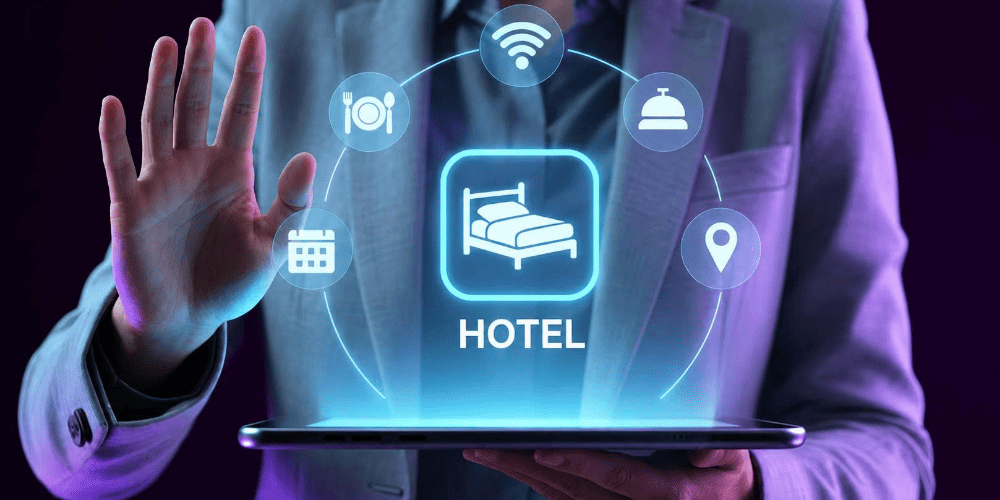
Beyond guest-facing services, AI in hotel industry is helping hotels streamline internal processes through advanced hotel operations automation.
Many administrative and repetitive tasks can now be automated, including:
- Housekeeping scheduling: AI can optimize cleaning schedules based on occupancy and room availability.
- Inventory management: Automated tracking helps ensure supplies are replenished efficiently and waste is minimized.
- Workforce planning: Staffing levels can be adjusted according to demand forecasts and operational needs.
- Service request prioritization: AI helps route and prioritize guest requests to improve response times.
AI continuously analyzes occupancy levels and operational data to ensure resources are allocated efficiently. This reduces inefficiencies, improves coordination between departments, and enables employees to focus on higher-value guest interactions. As a result, AI-powered hotel management systems help hotels improve productivity while maintaining consistent service quality, further demonstrating the operational value of AI in hotel industry.
Predictive Maintenance and Smart Facility Management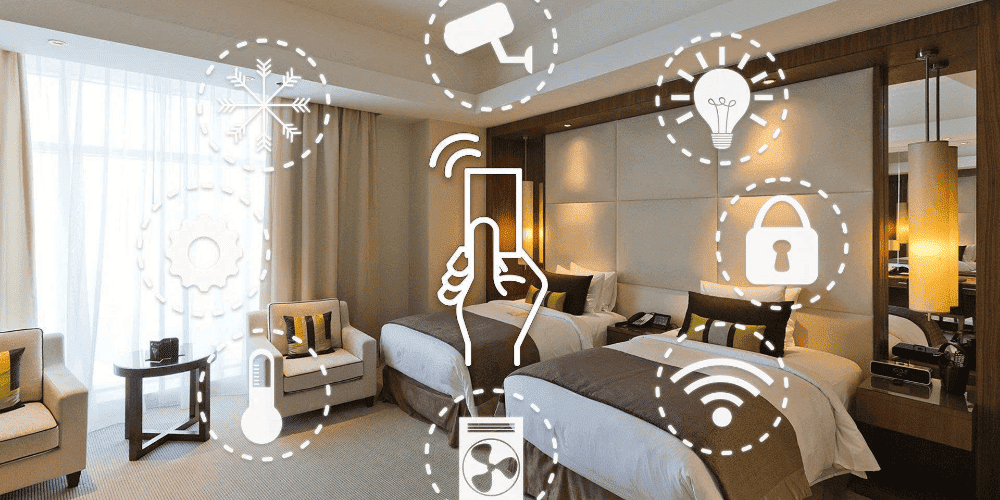
Unexpected equipment failures can negatively impact both guest satisfaction and operating costs. This is why predictive maintenance in hotels has become an increasingly important use case for AI.
By integrating AI with IoT sensors, hotels can monitor critical infrastructure such as:
- HVAC systems: AI detects performance issues early to maintain guest comfort and reduce energy waste.
- Elevators: Continuous monitoring helps prevent breakdowns and improve safety.
- Water systems: Potential leaks or inefficiencies can be identified before they become costly problems.
- Electrical equipment: AI helps maintenance teams detect abnormalities and reduce the risk of unexpected failures.
When abnormal performance patterns are detected, maintenance teams receive alerts and can address issues before failures occur. For large properties and resorts, predictive maintenance is a practical example of how AI in hotel industry can optimize operations while protecting the guest experience.
Core Benefits of AI in Hotel Industry
The growing adoption of AI in hotel industry is driven by the measurable business outcomes it delivers across multiple departments. While specific use cases vary, most hotels implement AI to improve service quality, increase efficiency, and support long-term growth.
Enhanced Guest Satisfaction
AI improves the guest experience through faster responses, personalized recommendations, and seamless interactions. Whether through virtual assistants, automated support, or tailored service suggestions, hotels can deliver a higher level of convenience. These improvements often lead to stronger guest loyalty, positive reviews, and increased repeat bookings.
Increased Revenue Opportunities
Through dynamic pricing, intelligent upselling, and data-driven decision-making, AI helps hotels identify and capture revenue opportunities in real time. Hotels can optimize room rates, promote relevant services, and improve conversion rates across multiple channels. This allows businesses to increase profitability without significantly increasing operational costs.
Improved Operational Efficiency
Automation reduces the time employees spend on repetitive tasks and administrative work. By streamlining workflows and improving resource allocation, AI enables hotel teams to focus more on service excellence and guest engagement. The result is a more productive workforce and smoother day-to-day operations.
Better Data-Driven Decision Making
AI transforms large volumes of hotel data into actionable insights. Managers gain deeper visibility into guest behavior, market demand, operational performance, and revenue opportunities. With better information available in real time, hotels can make faster and more informed strategic decisions.
Reduced Operating Costs
AI contributes to cost reduction through workforce optimization, predictive maintenance, energy management, and process automation. These improvements help hotels reduce waste, prevent disruptions, and operate more efficiently across departments. Over time, these savings can significantly improve overall profitability.
Stronger Competitive Advantage
Hotels that embrace AI for hotels and intelligent automation can differentiate themselves through superior service, faster decision-making, and more personalized experiences. As digital transformation accelerates across the hospitality sector, adopting AI is becoming a key competitive requirement. Hotels that invest early are often better positioned to adapt to changing customer expectations and market trends.
Leading AI Solutions for the Hospitality Industry
As hotels increasingly adopt AI in hotel industry initiatives to enhance guest experiences and optimize operations, a growing number of technology providers are developing specialized solutions for the hospitality sector.
Duve
Duve is a platform focused on digitizing the guest journey in hospitality, helping hotels enhance the guest experience from pre-arrival to post-stay. Its key features include online check-in/check-out, guest journey management, service upselling, and contactless experience tools. The platform is well-suited for hotels and resorts looking to improve guest satisfaction through digital transformation.
Lifesup AI
Lifesup AI is a comprehensive AI platform designed to help businesses accelerate the adoption of AI in hotel industry, enabling hotels to enhance guest experiences, optimize operations, and drive revenue growth across multiple properties.
- AI Guest Assistant: Supports guests before and during their stay by managing reservations, recommending services, and providing multilingual assistance 24/7.
- AI-Powered Upselling & CRM: Automates upselling and cross-selling strategies based on customer data to increase revenue per guest.
- Customer Data Analytics for Personalization & Remarketing: Analyzes customer behavior and preferences to deliver personalized experiences and targeted remarketing campaigns.
- AI-Powered Financial Management: Improves revenue forecasting, cost control, and financial visibility through intelligent data analysis.
- Centralized AI Operations & Performance Dashboard: Provides real-time insights into guest interactions, service performance, upselling effectiveness, and operational metrics across all properties.
Hotel chains, resorts, and hospitality businesses seeking an all-in-one AI solution to enhance guest experiences, streamline operations, and drive revenue growth across multiple locations.
Canary Technologies
Canary Technologies focuses on contactless hospitality solutions that simplify guest check-in, payments, and communication. Its platform includes mobile check-in/check-out, digital payments, guest messaging, and online identity verification. Canary is ideal for hotels looking to modernize front-desk operations, reduce manual processes, and provide a more convenient guest experience.
HiJiffy
HiJiffy provides an AI-powered communication platform that helps hotels automate guest interactions across multiple channels. With features such as AI chatbots, booking assistance, multilingual communication, and integrations with WhatsApp and social media platforms, HiJiffy enables hotels to improve response times and deliver more efficient customer service. It is particularly suitable for properties serving a large number of international guests.
Conclusion
AI in hotel industry is helping hotels enhance guest experiences, improve operational efficiency, and drive revenue growth. As AI adoption continues to expand, hotels that invest in the right AI solutions for hotels will be better positioned to stay competitive and meet evolving guest expectations.
Looking to implement AI in your hospitality business? Connect with Lifesup AI to explore tailored solutions for guest engagement, operations, and revenue optimization.
>>Read more: AI-Powered Smart Solutions for Hotel Chain Operations