
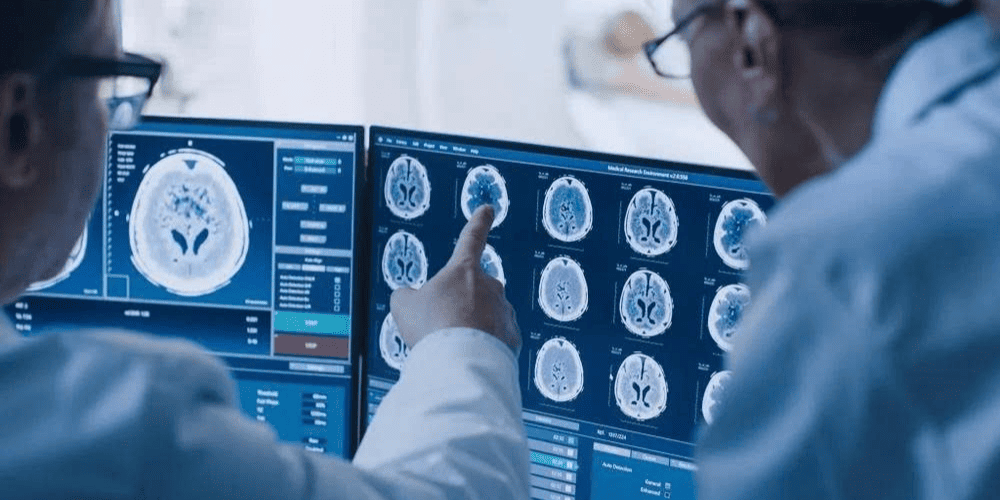
Healthcare organizations are increasingly adopting AI in medical diagnosis to improve diagnostic accuracy and support clinical decision-making. Explore five key applications of AI that are transforming disease detection, diagnosis, and patient care.
As healthcare becomes increasingly data-driven, clinicians must process growing volumes of patient information while maintaining diagnostic accuracy. This challenge has accelerated the adoption of AI in medical diagnosis, enabling healthcare professionals to analyze complex data, identify meaningful patterns, and support more informed clinical decisions. From medical imaging analysis to predictive risk assessment, AI is transforming how diagnoses are made across modern healthcare systems.
What is AI in Medical Diagnosis?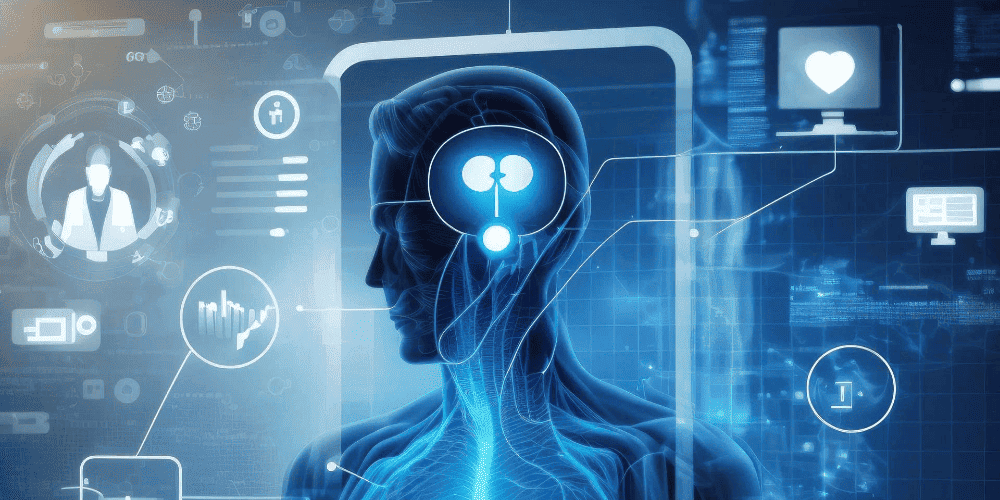
Artificial Intelligence in Medicine (Source: Internet)
AI in medical diagnosis refers to the use of artificial intelligence technologies to assist healthcare professionals in identifying diseases, evaluating patient conditions, and supporting diagnostic decision-making.
Unlike traditional software that relies on predefined rules, AI systems can learn from large datasets and recognize patterns within clinical information. These capabilities allow AI to analyze patient records, medical images, laboratory results, and other healthcare data to generate insights that support clinicians throughout the diagnostic process. Rather than replacing healthcare professionals, AI serves as a decision support tool that enhances human expertise and helps clinicians navigate increasingly complex healthcare environments.
AI in Medical Diagnosis Is Gaining Attention
Accurate diagnosis is one of the most important foundations of effective healthcare. However, modern clinicians face growing challenges as patient cases become more complex and medical knowledge continues to expand.
Patients often present with overlapping symptoms, multiple chronic conditions, and extensive medical histories. At the same time, healthcare professionals must evaluate information from numerous sources while making timely decisions. AI in medical diagnosis helps address these challenges by processing information more efficiently and uncovering insights that may not be immediately apparent. As healthcare systems continue to generate larger volumes of data, AI is becoming an increasingly valuable tool for improving both diagnostic accuracy and clinical efficiency.
5 Key Applications of AI in Medical Diagnosis
Medical Imaging Analysis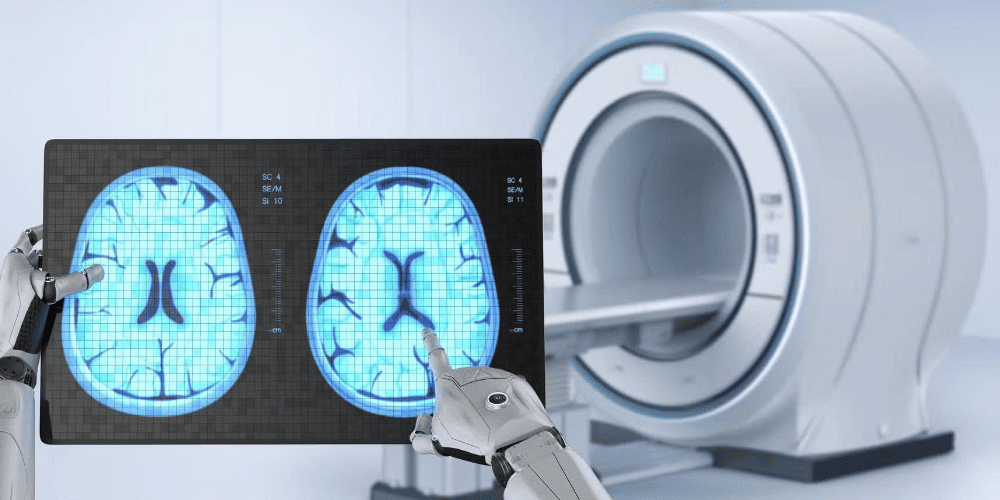
AI analysis through images. (Source: Internet)
Medical imaging is one of the most widely adopted applications of AI in medical diagnosis. As healthcare organizations generate thousands of imaging studies every day, reviewing them quickly and accurately becomes increasingly challenging. AI helps streamline this process by analyzing various types of medical images, including:
- X-rays: Detecting abnormalities in bones, lungs, and other anatomical structures that may indicate underlying conditions.
- CT scans: Supporting the identification of internal diseases through detailed cross-sectional imaging data.
- MRI scans: Assisting in the evaluation of soft tissues, neurological disorders, and musculoskeletal conditions.
- Ultrasound images: Helping healthcare providers assess organs, blood flow, and fetal development more efficiently.
By highlighting suspicious findings and prioritizing urgent cases, AI helps reduce diagnostic workload while improving efficiency. This application is particularly valuable in areas such as cancer screening, cardiovascular imaging, and respiratory disease detection.
Differential Diagnosis Support
Many diseases present similar symptoms, making differential diagnosis one of the most challenging aspects of clinical practice. AI supports this process by bringing together information from multiple sources, including:
- Patient symptoms: Evaluating symptom patterns, severity, and progression over time.
- Medical history: Reviewing previous diagnoses, treatments, and known health risks.
- Laboratory findings: Analyzing diagnostic test results to identify abnormalities or emerging trends.
- Clinical evidence and medical literature: Comparing patient information against established medical knowledge and research findings.
Rather than generating a single answer, AI helps narrow down potential conditions that match the available information. This allows clinicians to evaluate a broader range of possibilities and reduces the risk of overlooking less obvious diagnoses.
Early Disease Detection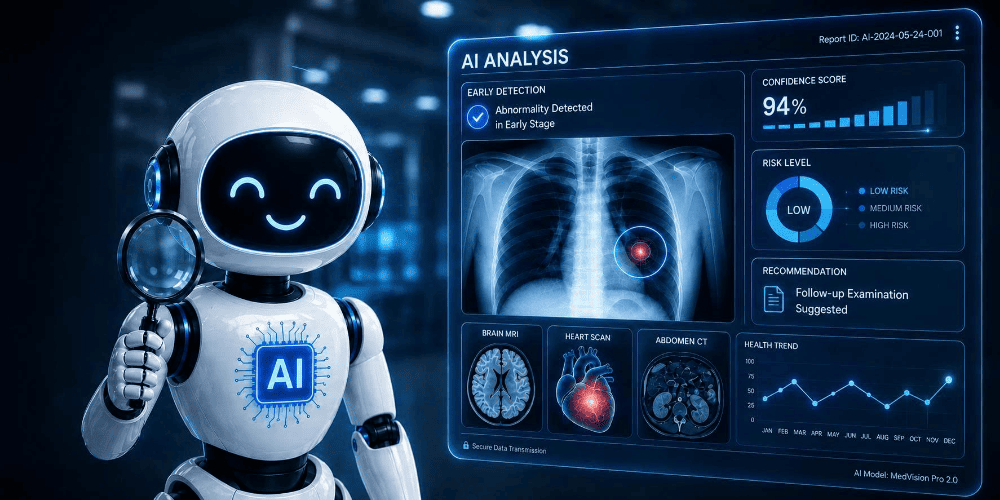
AI detects diseases in a timely manner. (Source: Internet)
Many serious diseases develop gradually, often showing subtle signs long before symptoms become noticeable. This is where AI can provide significant value. By analyzing different sources of patient information, AI can identify patterns that may indicate emerging health risks.
Key data sources include:
- Historical health records: Tracking long-term health changes that may signal disease progression.
- Laboratory trends: Identifying small variations in test results that could indicate early-stage conditions.
- Risk factors: Assessing lifestyle, genetic, and environmental influences associated with specific diseases.
- Patient-generated health data: Monitoring information collected through wearable devices and digital health platforms.
Detecting these signals earlier allows healthcare providers to take action before a condition progresses. This capability is especially important for chronic diseases, where early intervention can improve treatment effectiveness and long-term outcomes.
Clinical Decision Support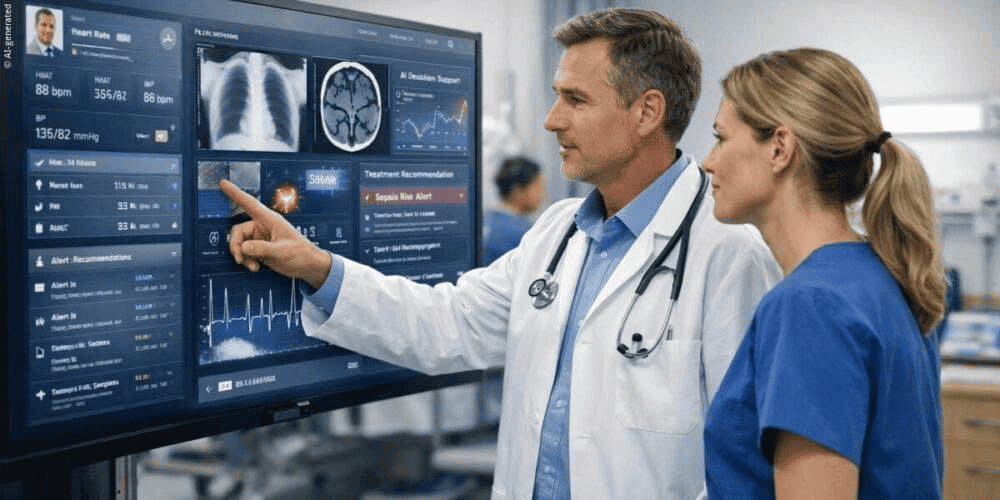
Supporting healthcare professionals in decision-making. (Source: Internet)
Modern clinicians often need to review large amounts of information before making a diagnosis. Clinical decision support systems use AI to organize relevant data, compare findings against medical guidelines, and provide evidence-based recommendations.
Instead of replacing clinical expertise, these systems help simplify complex decision-making by presenting the most relevant information at the right time. This can reduce the time spent searching through records, improve consistency across cases, and support more efficient diagnostic workflows. As healthcare data continues to grow, AI-powered decision support is becoming an increasingly important part of modern clinical practice.
Predictive Risk Assessment
Healthcare is increasingly shifting from reactive treatment to proactive prevention. Predictive risk assessment uses AI to identify individuals who may be at higher risk of developing future health conditions.
To estimate risk levels, AI can analyze:
- Patient history: Understanding previous diagnoses, treatments, and existing medical conditions.
- Lifestyle factors: Evaluating habits such as diet, physical activity, sleep quality, and smoking behavior.
- Clinical indicators: Assessing measurable health metrics including blood pressure, cholesterol levels, and laboratory results.
- Population health trends: Comparing individual patient profiles against broader healthcare datasets to identify risk patterns.
These insights help healthcare organizations identify vulnerable populations earlier and implement preventive strategies before complications occur. By focusing on prevention rather than treatment alone, predictive risk assessment supports better long-term health outcomes and more efficient resource allocation.
Benefits of AI in Medical Diagnosis
The growing adoption of AI in medical diagnosis is creating measurable benefits for both healthcare providers and patients. By supporting clinicians throughout the diagnostic process, AI not only improves efficiency but also contributes to more accurate and timely healthcare decisions.
Improved Diagnostic Accuracy
One of the most significant benefits of AI in medical diagnosis is its ability to improve diagnostic accuracy. AI systems can analyze large volumes of healthcare data and identify patterns that may be difficult to detect through manual review alone. By providing additional clinical insights and highlighting potentially relevant findings, AI helps healthcare professionals make more informed diagnostic decisions and reduces the risk of overlooked information.
Faster Clinical Assessments
Healthcare professionals often work in fast-paced environments where timely decision-making is essential. AI helps accelerate the diagnostic process by automating the analysis of patient records, laboratory results, medical images, and other clinical information. This enables clinicians to review critical data more efficiently, allowing them to focus more time on patient care and treatment planning.
More Consistent Decision Support
Consistent medical information (Source: Internet)
Diagnostic outcomes can sometimes be influenced by factors such as workload, fatigue, or time pressure. AI provides a consistent analytical framework that can be applied across cases, helping healthcare professionals evaluate information using the same evidence-based approach. This consistency supports more standardized decision-making and can improve the overall reliability of diagnostic processes.
Enhanced Patient Outcomes
Patients can rest assured about their treatment. (Source: Internet)
Ultimately, the value of AI in medical diagnosis extends beyond operational efficiency. More accurate diagnoses, faster assessments, and earlier interventions can all contribute to better patient outcomes. When healthcare professionals have access to deeper insights and stronger decision support, they are better equipped to develop effective treatment plans and deliver high-quality care throughout the patient journey.
Challenges and Considerations
Despite its potential, AI is not a standalone solution for healthcare diagnosis. The effectiveness of AI in medical diagnosis depends on the quality of the data used to train and operate these systems. Inaccurate, incomplete, or biased data can affect performance and reduce the reliability of AI-generated insights. Healthcare organizations must also ensure that AI tools integrate smoothly into clinical workflows and provide sufficient transparency for clinicians to understand how recommendations are generated. Successful implementation requires a balance between technological innovation and human expertise.
Building Trust in AI-Assisted Diagnosis
The long-term success of AI in medical diagnosis depends not only on technical performance but also on trust. Healthcare professionals need confidence that AI-generated insights are accurate, relevant, and clinically meaningful. This trust grows when AI systems are transparent, reliable, and designed to support rather than replace human decision-making.
The most effective approach combines the analytical capabilities of AI with the experience, judgment, and empathy of healthcare professionals. In this model, AI strengthens clinical decision-making while clinicians remain at the center of patient care.
Conclusion
AI in medical diagnosis is transforming the way healthcare professionals detect diseases, evaluate patients, and support clinical decision-making. Through applications such as medical imaging analysis, differential diagnosis support, early disease detection, clinical decision support, and predictive risk assessment, AI is helping improve diagnostic accuracy and patient outcomes. As adoption continues to grow, AI will become an increasingly valuable partner in delivering more efficient and informed healthcare.
Contact Lifesup AI today to schedule a consultation and explore the right AI strategy for your organization.
>> Read more: Top 14 AI Trends Reshaping the Retail Industry in 2026