
In 2026, the retail industry is no longer measured simply by the scale of physical stores or the number of products available on digital shelves. Instead, its strength is defined by data, speed of response, and the ability to understand both customer behavior and emotions. As we navigate this era, AI trends in retail have moved past the experimental phase, evolving into the very nervous system of global commerce.
From virtual assistants that can interpret emotional cues to self-healing supply chains, the integration of Artificial Intelligence is no longer a competitive advantage – it is a baseline for survival. This article summarizes and analyzes 14 key AI trends that are reshaping how people shop, sell, and experience retail in 2026.
Why AI Adoption in Retail Is Essential Today
By 2026, AI has become a core operational foundation of the retail industry rather than just a supporting technology. In an increasingly competitive market, businesses that fail to adopt AI are losing advantages in speed, data use, and decision-making. Its importance can be summarized in three key areas:
The death of generic experiences
Consumers increasingly expect shopping experiences tailored to their individual behaviors, preferences, purchase history, and usage context. AI enables businesses to analyze large-scale data and deliver more relevant experiences for different customer groups instead of applying a one-size-fits-all approach.
Operational resilience
The retail market is heavily impacted by economic fluctuations, climate change, and global disruptions. This makes traditional reactive operating models less effective. AI helps businesses forecast demand, identify risks early, and optimize supply flows, thereby improving the overall adaptability of the supply chain.
Efficiency and margin protection
Operating, logistics and labor costs continue to rise while profit margins are being squeezed. AI supports the automation of key processes such as inventory management, dynamic pricing, customer service, and data analytics, helping businesses reduce costs and improve operational efficiency in a sustainable way.
>> Read more: AI in Retail industry: The key to margin optimization & EBITDA growth
14 Leading AI Trends in Retail to Watch in 2026
Below are 14 prominent AI trends that are reshaping the entire retail industry in 2026.
1. AI-Powered Shopping Assistants
Rigid and limited chatbots from the early 2020s have largely disappeared. By 2026, AI shopping assistants have evolved into advanced multi-modal systems powered by next-generation large language models (LLMs). Instead of relying solely on keywords, they are capable of understanding user intent, context, and real needs.
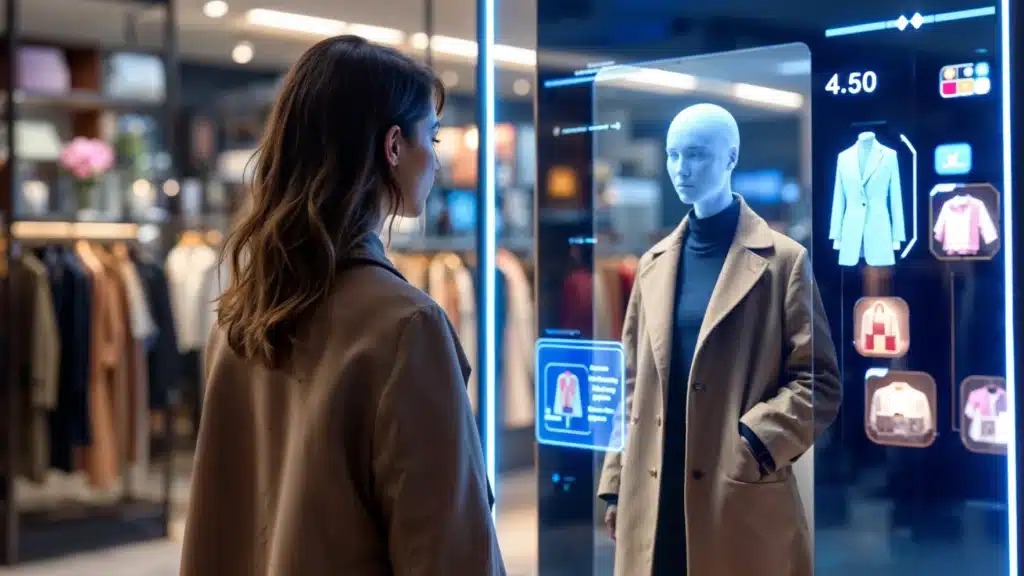
Example: A customer can say, “I need a professional yet breathable outfit for a three-day conference in Singapore next week, including shoes comfortable enough for 10,000 steps a day.” The AI assistant cross-references weather data, the user’s style profile, and real-time inventory to curate a complete wardrobe.
2. Personalized Shopping Experiences with AI
Personalization in retail has evolved into “Cognitive Commerce.” In this model, AI goes beyond purchase history and analyzes “micro-moments” such as scrolling speed, time spent on each product, and even facial expressions (when users grant camera access) to better understand customer behavior and adjust the shopping experience in real time.
The result is a fully personalized shopping environment, where every product recommendation and offer is optimized based on each individual’s behavior and specific needs.
3. AI Visual Search
Visual search has become a key bridge between the physical world and digital shopping experiences. With the advancement of high-resolution computer vision technology, consumers can simply take a photo of a real-world item – such as a jacket seen on the street or a lamp featured in a movie and AI can instantly identify the product or suggest similar and ethically sourced alternatives across the global retail ecosystem. In 2026, “if you can see it, you can buy it.”
4. AI Virtual Try-On
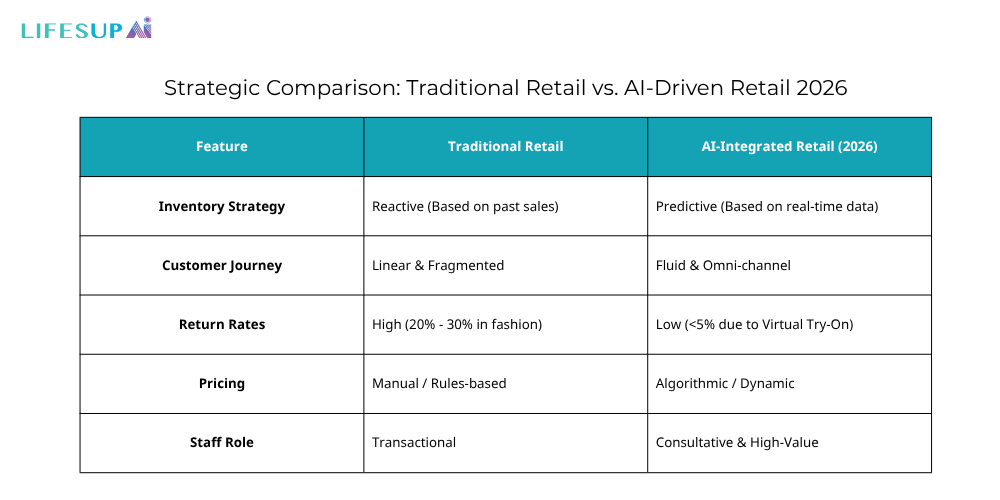
The “try-before-you-buy” revolution has helped solve the multi-billion-dollar return problem in the retail industry. By 2026, virtual try-on technology is powered by high-resolution 3D body scanning combined with realistic fabric physics simulation.
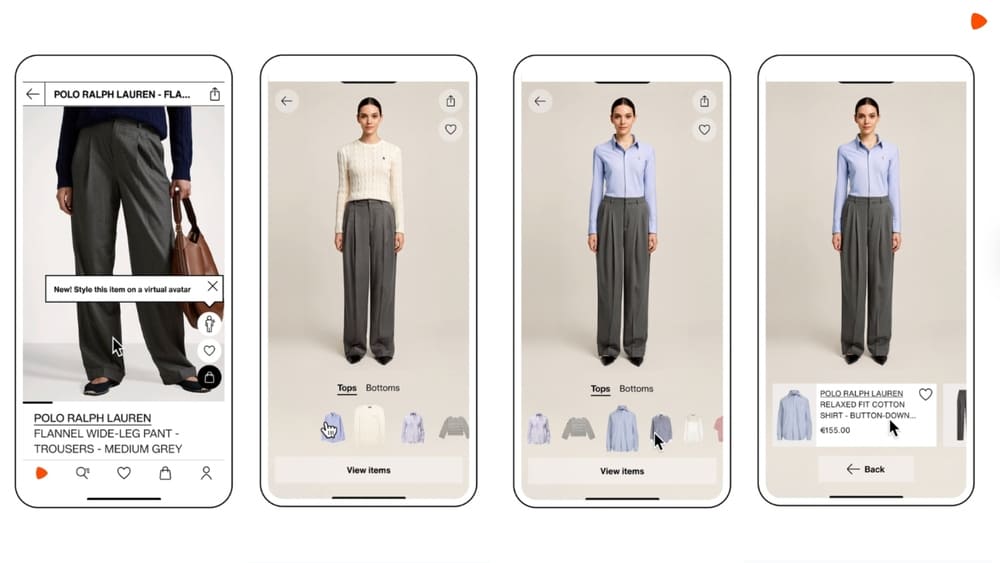
As a result, customers can accurately see how garments drape, fit, stretch, and move across different body types. This experience significantly increases confidence when purchasing high-end fashion and luxury items.
5. AI Chatbots & Voice Commerce
Voice commerce is becoming increasingly mainstream thanks to its integration into smart home devices and wearable technology. As a result, interactions between customers and retail brands are becoming more natural and conversational.
In this context, AI chatbots act as personal assistants capable of handling complex requests such as: “Track my order and check whether the delivery driver can leave the package in the hidden box behind the porch.”
These systems are also equipped with emotional recognition capabilities, allowing them to detect customer frustration or dissatisfaction and automatically escalate the conversation to human agents, along with full contextual information for faster and more effective resolution.
6. AI Demand Forecasting
Traditional forecasting models have become increasingly inaccurate in the face of strong market volatility in the mid-2020s.
Today, AI-driven demand forecasting leverages alternative data such as social media trends, local event schedules, and macroeconomic indicators. As a result, retailers no longer need to manually estimate inventory levels. Instead, they can accurately identify which products are likely to be sold in specific regions within a short time frame, helping optimize inventory and reduce the risk of overstocking.
7. AI Inventory & Supply Chain
By 2026, supply chains have become autonomous and self-adaptive. AI continuously monitors global shipping routes in real time and dynamically responds to disruptions as they occur.
For example, if a port strike happens in Europe, the system automatically reroutes shipments, alerts downstream distributors, and adjusts marketing strategies based on inventory availability in each region.
This level of agility significantly reduces stockout situations, which are gradually becoming rare in modern retail.
8. Dynamic Pricing with AI
In today’s retail environment, product pricing is no longer fixed but continuously optimized in real time. AI models analyze multiple factors simultaneously, including competitor pricing, inventory levels, and market demand elasticity, to determine the most effective price at any given moment.
For perishable goods, AI can automatically trigger dynamic discounting strategies to ensure products are sold before expiration, minimizing waste and maximizing revenue instead of allowing stock to remain unsold or expire.
9. AI Store Layout & Merchandising
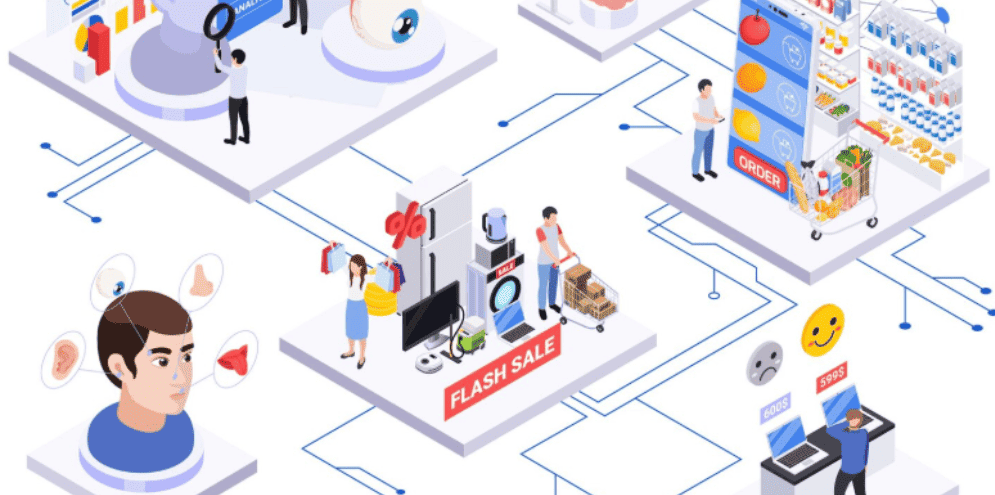
In physical stores, AI uses heat mapping and path-tracking to analyze how customers move through different areas. Based on this data, retailers can optimize product placement on shelves to improve visibility and engagement.
For example, if AI detects that customers often look at organic snacks but rarely purchase them, the system may suggest relocating the display to a higher-traffic area or adjusting lighting to make the products more visually appealing.
10. Generative AI in Retail
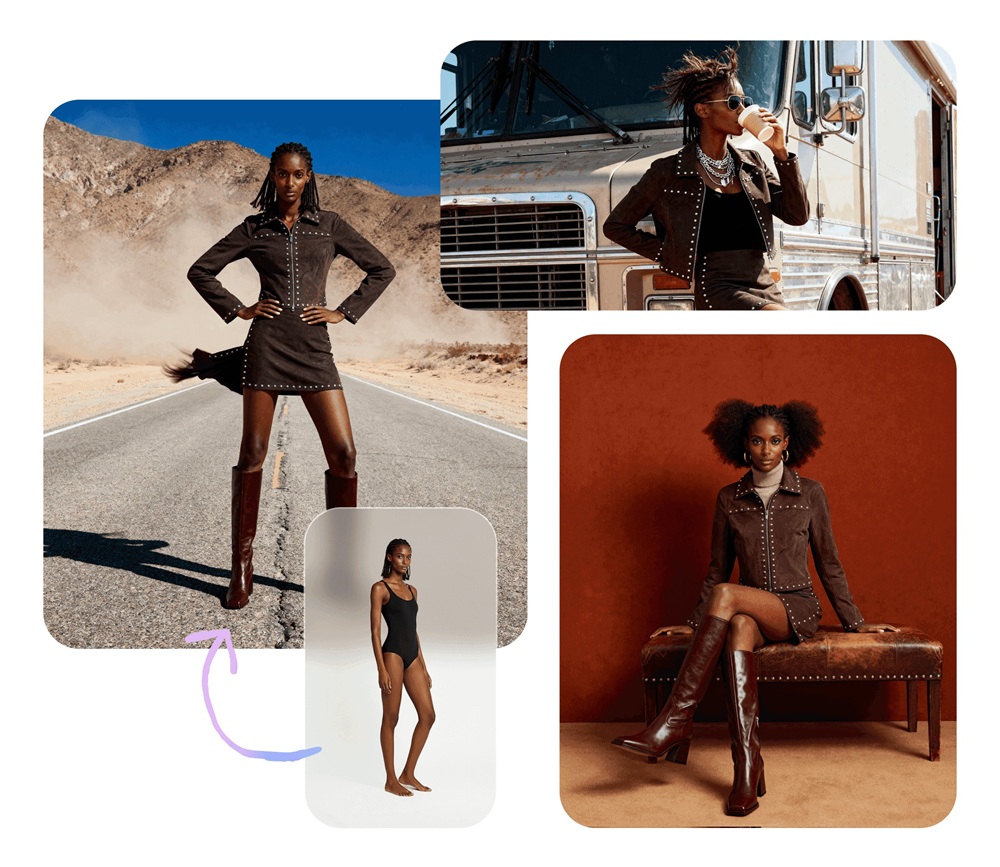
Generative AI in Retail is becoming an important tool for content creation in the retail industry. It can generate thousands of advertising variations tailored to different markets within seconds, while also supporting the creation of virtual fashion models to enhance diversity in visual communication. As a result, content production costs are significantly reduced.
In addition, GenAI is enabling a “co-creation” model, where customers can use AI tools on websites to design patterns or customize products according to their personal preferences.
11. AI Employee Training
In the retail industry, employees are being trained through AI-powered Adaptive Learning, which personalizes training content based on each individual’s skill level and learning pace.
Combined with VR and AI simulations, staff can practice real-life scenarios such as handling difficult customers or learning new product details in a safe environment. These systems also provide instant feedback, helping employees improve their skills more quickly.
As a result, employees go beyond basic sales tasks and develop stronger product knowledge and better problem-solving abilities.
12. AI Recommendation Engines
Deep Learning models have upgraded recommendation systems to a level where they can understand the user’s lifestyle context. Instead of relying only on purchase history like “people who bought this also bought…”, AI now analyzes the customer’s overall behavior and needs.
For example, if a user recently purchased a yoga mat and searched for healthy recipes, the system can recognize a wellness-oriented lifestyle and recommend products such as dietary supplements or suitable sportswear.
13. Customer Insights & Analytics
Data is considered the “new resource,” while AI acts as a “refinery” that processes and transforms information. By 2026, retailers use AI to aggregate unstructured data such as customer reviews, social media comments, and call logs into concise, action-oriented analytical reports.
Instead of reading dozens of pages of reports, managers can simply ask questions like, “Why are Gen Z sales declining in California?” and receive detailed insights on market sentiment and competitor activity within seconds.
14. AI Fraud Detection
As retail becomes increasingly digital, fraudulent activities are also becoming more sophisticated. Modern AI systems use behavioral biometrics such as how users type, swipe, and interact with interfaces to verify identity.
This invisible security layer helps prevent account takeovers and payment fraud without disrupting the experience of legitimate customers.
How Businesses Can Effectively Apply AI in Retail?
Implementing AI trends in retail is not about buying software; it’s about a cultural and structural transformation. Here is the roadmap for effective implementation in 2026::
Phase 1: Data Democratization and Hygiene
AI is only as good as the data it consumes. Businesses need to eliminate data silos between online and offline channels and build a unified data system (Unified Commerce Platform). Ensure your data is “Clean, Connected, and Compliant” (with global privacy laws like GDPR 2.0).
Phase 2: Focus on quick wins (ROI-First)
Instead of pursuing complex initiatives from the start, businesses should prioritize AI applications that deliver clear and immediate impact:
- Customer Support: Deploy advanced LLM bots to handle 80% of routine queries.
- Demand Forecasting: Reduce inventory carrying costs by 15-20% through predictive modeling.
Phase 3: Human-AI Collaboration
The success of AI in retail is not about replacing people, but enhancing their capabilities.
Companies should train creative teams to use generative AI for ideation, while equipping frontline staff with AI-powered tools to better support customers and deliver more personalized experiences.
Phase 4: Ethical and Transparent AI
Customer trust is becoming a key competitive advantage. Therefore, businesses must be transparent about how AI is used, especially in sensitive areas such as behavioral analytics or image recognition.
Ensuring data is anonymized and clearly communicated to customers helps build long-term brand trust and strengthen customer loyalty.
>> Read more: 12 Best retail AI platforms to help businesses lead in 2026
The transformation of the retail industry through AI is not a future event – it is happening in real-time. The AI trends in retail we see in 2026 represent a shift toward a more efficient, personalized, and resilient global marketplace.
For retailers, the mandate is clear: Innovate or become obsolete. By embracing these 14 trends, businesses can move beyond mere transactions and start building deep, lasting relationships with their customers in an increasingly automated world.
Ready to turn emerging AI trends in retail into real business growth? Connect with Lifesup AI to explore intelligent AI retail solutions that help retailers personalize customer experiences, optimize operations, and scale smarter in the digital era.