

Healthcare organizations have invested heavily in digital transformation over the past decade, yet documentation remains one of the most time-consuming aspects of clinical practice. Physicians, nurses, and administrative staff continue to spend a significant portion of their day writing notes, updating electronic medical records, preparing visit summaries, and completing compliance-related documentation. While these records are essential for delivering safe and coordinated care, the growing administrative workload often leaves healthcare professionals with less time for their patients.
This challenge has driven increasing interest in AI documentation in healthcare. Rather than replacing clinicians, AI helps automate repetitive documentation tasks, organize clinical information, and generate structured records that can be reviewed before becoming part of the patient’s medical history. By reducing paperwork while maintaining documentation quality, healthcare organizations can improve operational efficiency and allow care teams to focus on what matters most delivering better patient care.
Why Clinical Documentation Has Become a Growing Operational Challenge
Clinical documentation is essential to every stage of patient care. From recording diagnoses and treatment plans to maintaining medical histories and supporting follow-up care, accurate documentation ensures continuity of care while enabling communication between healthcare teams, regulatory compliance, insurance claims, and operational reporting.
As healthcare systems become more digital and patient volumes continue to grow, documentation requirements have become increasingly demanding. Physicians and nurses are expected to capture more clinical information within limited consultation times, leaving less time for direct patient interaction. Even with Electronic Medical Record (EMR) systems, many organizations still rely on manual data entry, duplicate documentation, and fragmented records across multiple platforms. For hospital and clinic managers, these inefficiencies reduce staff productivity, increase operational costs, and ultimately affect the overall patient experience.
What Is AI Documentation in Healthcare?
AI documentation in healthcare refers to the use of artificial intelligence to automate and streamline the creation, organization, and management of clinical documentation. Instead of requiring healthcare professionals to manually prepare every record, AI can capture relevant clinical information, generate structured documentation, and organize patient data into standardized formats that clinicians review and approve before finalization.
Modern AI documentation solutions support a wide range of clinical workflows, from generating SOAP notes and visit summaries to updating medical records and organizing patient information. By reducing repetitive documentation tasks rather than replacing clinical judgment, AI enables healthcare professionals to spend less time on administrative work and more time delivering high-quality patient care.
Four Core Areas Where AI Documentation Creates the Greatest Value
AI-Generated SOAP Notes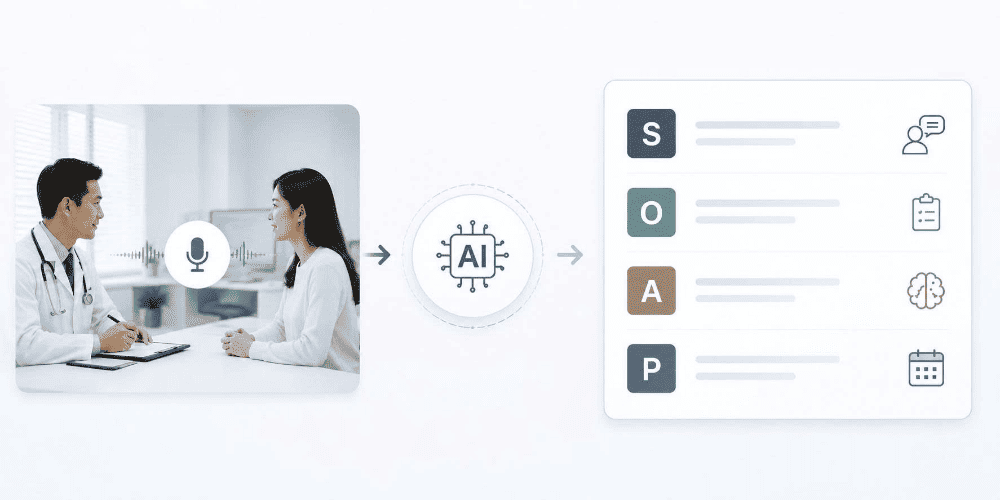
AI-Generated SOAP Notes for Smarter Clinical Documentation ( Source: Internet )
SOAP Notes remain one of the most widely used documentation standards in healthcare because they provide a structured framework for recording patient encounters. By organizing clinical information into Subjective, Objective, Assessment, and Plan, SOAP notes make it easier for different healthcare professionals to understand previous consultations and continue patient care consistently.
However, preparing SOAP notes manually requires physicians to recall consultation details, summarize examination findings, document assessments, and record treatment plans after every patient visit. Even if each note only takes a few minutes, the cumulative workload becomes substantial in busy hospitals and clinics.
AI documentation significantly simplifies this process. Instead of beginning with a blank document, clinicians receive a structured draft generated from the consultation. AI automatically organizes clinical information into the appropriate SOAP sections, allowing physicians to review and edit rather than write everything manually.
An AI-generated SOAP note may include:
- Patient-reported symptoms and medical history (Subjective)
- Vital signs and examination findings (Objective)
- Clinical assessment and working diagnosis (Assessment)
- Treatment recommendations and medications (Plan)
- Follow-up appointments
- Additional testing recommendations
This workflow reduces repetitive documentation while improving consistency across different clinicians. Standardized SOAP notes also make patient records easier to review during future consultations, improving communication across healthcare teams.
Automatically Creating Visit Summaries
Clinical documentation should continue even after the consultation ends. Patients often leave healthcare facilities with medications, lifestyle recommendations, referrals, laboratory requests, and follow-up appointments that they need to remember once they return home. Unfortunately, preparing comprehensive visit summaries for every patient is another administrative responsibility that consumes valuable clinician time.
Without clear visit summaries, patients may misunderstand treatment instructions or forget important recommendations. This can contribute to medication errors, missed follow-up appointments, poor treatment adherence, and avoidable readmissions.
AI documentation helps solve this problem by automatically generating structured visit summaries immediately after each consultation. Rather than manually preparing the document, clinicians review an AI-generated summary before sharing it with the patient.
A standardized visit summary typically includes:
- Reason for today’s visit
- Confirmed diagnosis
- Medications prescribed
- Recommended laboratory tests
- Imaging or specialist referrals
- Follow-up appointment schedule
- Home-care instructions
- Symptoms that require immediate medical attention
For healthcare organizations, this approach improves communication while ensuring every patient receives consistent information. Patients leave the clinic with a clearer understanding of their treatment plan, while clinicians spend less time completing administrative paperwork.
Smarter Medical Records Management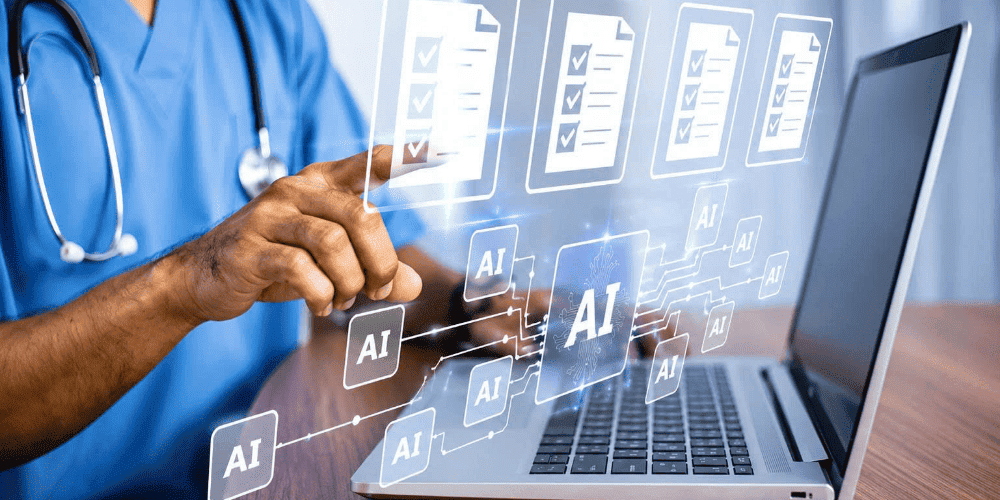
AI-Powered Medical Records Management for Smarter Healthcare Operations ( Source: Internet )
Electronic Medical Records have dramatically improved healthcare documentation compared with traditional paper files. However, many hospitals still struggle with fragmented information, duplicate records, inconsistent documentation standards, and disconnected clinical systems. Over time, patient histories become increasingly difficult to navigate, particularly for individuals managing chronic conditions or receiving care from multiple specialists.
Healthcare professionals often need to search through years of documentation before making clinical decisions. This process can be both time-consuming and inefficient, especially during busy clinic hours.
Instead of manually reviewing lengthy patient histories, AI documentation helps organize medical records by identifying and categorizing clinically relevant information. Important patient data becomes easier to locate, reducing the amount of time clinicians spend searching for historical records.
AI-assisted medical records can quickly highlight:
- Previous diagnoses
- Current medications
- Drug allergies
- Laboratory results
- Imaging reports
- Surgical history
- Chronic conditions
- Previous hospital admissions
- Specialist consultations
Beyond improving accessibility, AI can also detect documentation issues before records are finalized. These may include duplicate information, missing clinical details, inconsistent terminology, incomplete documentation, or missing approvals. By improving record quality at the documentation stage, healthcare organizations reduce the need for manual administrative review later in the workflow.
Intelligent Clinical Documentation Across the Entire Patient Journey
AI-Powered Clinical Documentation Across the Patient Care Journey ( Source: Internet )
Documentation in healthcare extends far beyond consultation notes. Every patient interaction generates multiple documents that support clinical care, communication, operational management, and regulatory compliance. As healthcare organizations grow, maintaining consistency across these documents becomes increasingly challenging.
Throughout the patient journey, hospitals and clinics routinely create:
- Admission documentation
- Nursing notes
- Consultation records
- Procedure documentation
- Referral letters
- Discharge summaries
- Consent forms
- Clinical reports
- Administrative documentation
Preparing each of these documents manually often leads to duplicated work, inconsistent formatting, and repetitive data entry across multiple systems.
AI documentation helps standardize this process by automatically extracting relevant patient information, populating documentation templates, organizing clinical data, and reducing unnecessary manual input. Rather than repeatedly entering the same patient information into different forms, healthcare professionals can review AI-generated documentation and focus on delivering care.
As documentation becomes more standardized, healthcare organizations benefit from higher data quality, improved operational visibility, and more consistent documentation practices across departments. This not only supports frontline clinicians but also provides hospital managers with more reliable information for quality improvement, compliance, and performance monitoring.
Benefits of AI Documentation for Hospital and Clinic Managers
While AI documentation directly reduces the administrative workload for physicians and nurses, its impact extends far beyond individual productivity. Faster and more accurate documentation improves workforce efficiency, operational performance, regulatory compliance, and the overall patient experience. For hospital and clinic managers, these improvements contribute to more effective resource management and better long-term organizational outcomes.
Improve Workforce Efficiency
AI-Powered Workforce Efficiency for Modern Healthcare Organizations ( Source: Internet )
When clinicians spend less time documenting patient encounters, they can devote more attention to patient consultations, clinical decision-making, and care coordination. This allows healthcare organizations to optimize staff productivity, improve patient throughput, and reduce administrative burden without increasing headcount particularly in high-volume outpatient settings.
Standardize Clinical Documentation
AI-Powered Standardized Clinical Documentation for Consistent Patient Records ( Source: Internet )
AI helps create more consistent clinical records by following standardized documentation formats and reducing variations between healthcare professionals. Consistent records improve communication among physicians, nurses, and specialists while making patient information easier to access and interpret throughout the care journey.
Strengthen Compliance and Documentation Quality
Accurate and standardized documentation also supports regulatory compliance and quality assurance initiatives. Complete medical records simplify internal audits, accreditation processes, and reporting requirements while reducing the risk of incomplete or inconsistent documentation that could affect patient safety or regulatory performance.
Enable Better Operational Decisions
High-quality documentation generates structured clinical data that can be analyzed more effectively. Hospital managers gain greater visibility into patient flow, resource utilization, documentation quality, and departmental performance. Instead of relying on fragmented information, leaders can make more informed decisions based on reliable operational data.
Improve Financial Performance
Reducing documentation time helps healthcare organizations operate more efficiently. Less administrative work can decrease overtime, improve staff utilization, and allow clinicians to care for more patients during the same working hours. Over time, these improvements contribute to lower operational costs and stronger organizational performance.
Enhance the Experience of Both Staff and Patients
Reducing paperwork enables clinicians to focus more on patient care instead of administrative tasks. Patients benefit from more attentive consultations and clearer communication, while healthcare professionals experience lower administrative stress and greater job satisfaction.
Best Practices for Implementing AI Documentation
Best Practices for AI-Powered Clinical Documentation Implementation ( Source: Internet )
Although AI documentation offers significant operational benefits, successful implementation requires more than simply deploying new technology. Healthcare organizations should integrate AI into existing clinical workflows in a way that supports healthcare professionals, protects patient information, and continuously improves documentation quality over time.
Start with High-Impact Workflows
Begin by identifying documentation tasks that consume the most time, such as consultation notes, SOAP notes, discharge summaries, visit summaries, or routine medical record updates. Automating these repetitive processes often delivers the fastest operational improvements and encourages early user adoption.
Integrate with Existing Healthcare Systems
AI documentation should work seamlessly with Electronic Medical Records (EMR), Hospital Information Systems (HIS), and other clinical platforms. Smooth integration eliminates duplicate data entry, keeps patient information synchronized across systems, and creates a single source of accurate clinical data.
Protect Patient Data and Privacy
Healthcare organizations should ensure that AI documentation solutions comply with relevant healthcare privacy regulations and organizational security policies. Strong encryption, role-based access control, secure data storage, and continuous monitoring help safeguard sensitive patient information throughout the documentation process.
Train Healthcare Professionals
Technology is most effective when users understand how to apply it in daily practice. Healthcare organizations should provide practical training that helps clinicians understand AI capabilities, recognize its limitations, and incorporate AI documentation naturally into existing clinical workflows.
Maintain Human Oversight
AI should assist not replace clinical judgment. Every AI-generated clinical note should be reviewed, verified, and approved by qualified healthcare professionals before becoming part of the official medical record. Human oversight ensures documentation remains accurate, clinically appropriate, and aligned with professional standards.
Continuously Monitor Performance
Implementation should not end after deployment. Organizations should regularly evaluate documentation quality, workflow efficiency, user adoption, clinician satisfaction, and operational outcomes. Continuous monitoring allows healthcare leaders to refine AI workflows, maximize return on investment, and ensure long-term success.
Conclusion
As documentation requirements continue to grow, reducing administrative work has become a priority for healthcare organizations. AI documentation in healthcare helps automate repetitive tasks such as SOAP notes, visit summaries, medical records, and other clinical documentation, allowing healthcare professionals to spend less time on paperwork and more time delivering quality patient care. Beyond improving efficiency, standardized documentation also supports better collaboration, compliance, and operational decision-making across hospitals and clinics.
Lifesup AI helps hospitals and clinics automate documentation workflows, improve operational efficiency, and enable healthcare teams to focus more on patient care.
>>Read more: AI in Healthcare: How AI Is Transforming Healthcare Management and Operations