
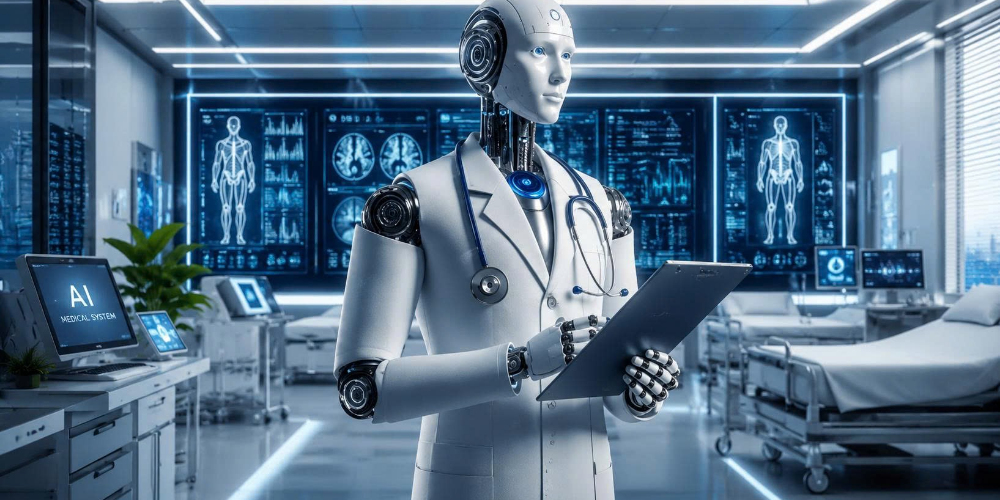
Discover how AI in healthcare is evolving beyond chatbots to optimize healthcare operations, improve patient coordination, streamline workflows, and create real operational value. Artificial intelligence is rapidly transforming healthcare operations. While chatbots and virtual assistants are popular entry points, they address only a small part of the challenge. Modern AI in healthcare has evolved into comprehensive operational systems that streamline workflows, coordinate care, and optimize operations at scale going far beyond isolated communication tools.
The Healthcare Industry Is Facing Operational Complexity
Operational complexity in healthcare (source: Internet)
Modern healthcare organizations manage a growing number of operational processes across multiple departments and patient touchpoints. Including:
- Manual scheduling processes that consume valuable staff time and increase the risk of appointment conflicts, delays, and inefficient resource allocation.
- Fragmented communication between departments and care teams, making it difficult to maintain consistent coordination throughout the patient journey.
- Disconnected systems that limit operational visibility and make it harder for organizations to access centralized information in real time.
- Patient experiences are often not fully optimized due to slow response times, missed follow-ups, forgotten follow-up appointments, and a lack of continuous engagement throughout the care journey.
These inefficiencies impact both operational performance and patient experience. As healthcare operations become increasingly complex, organizations require more intelligent and connected systems capable of supporting end-to-end operational management rather than isolated processes.
Why Chatbots Alone Are Not Enough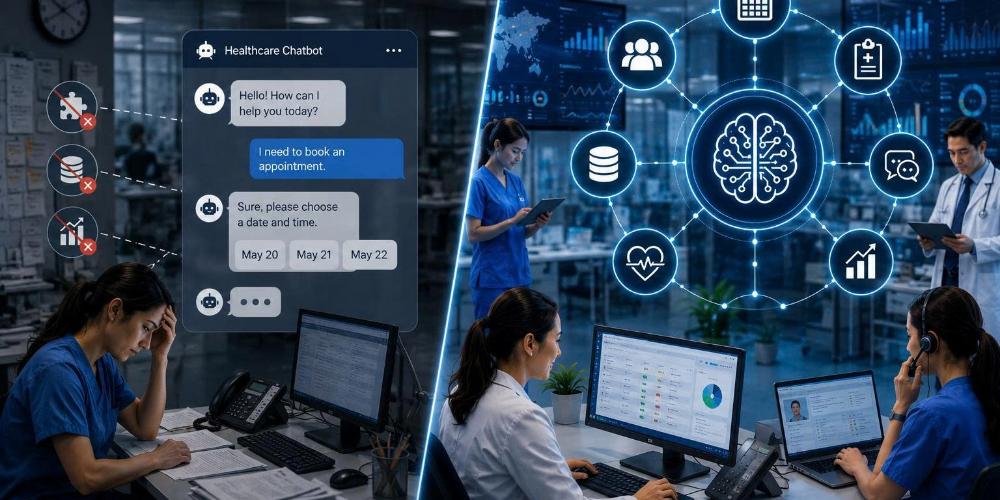
Chatbots and comprehensive AI solutions (source: Internet)
Many healthcare organizations initially adopt AI through chatbot systems because they offer an accessible starting point for automation. Chatbots can assist with patient inquiries, appointment booking, 24/7 response availability outside business hours.
While these capabilities provide value, standalone chatbot systems still have significant limitations when it comes to broader healthcare operations. Most chatbot solutions operate independently without deep integration into the organization’s workflows and operational infrastructure. This means they may improve communication at a single touchpoint while leaving the rest of the operational process unchanged.
Healthcare organizations still struggle with fragmented operations:
- Care teams work across disconnected systems, making workflow coordination slow and error-prone
- Staff schedules constantly change, leading to understaffing, burnout, and inefficient resource allocation
- Leaders lack real-time operational visibility, delaying critical decisions and reducing responsiveness
- Patient follow-ups are often manual and inconsistent, increasing missed appointments and gaps in care
- Communication between departments remains fragmented, causing delays, duplicated work, and poor patient experiences
How AI Supports Healthcare Teams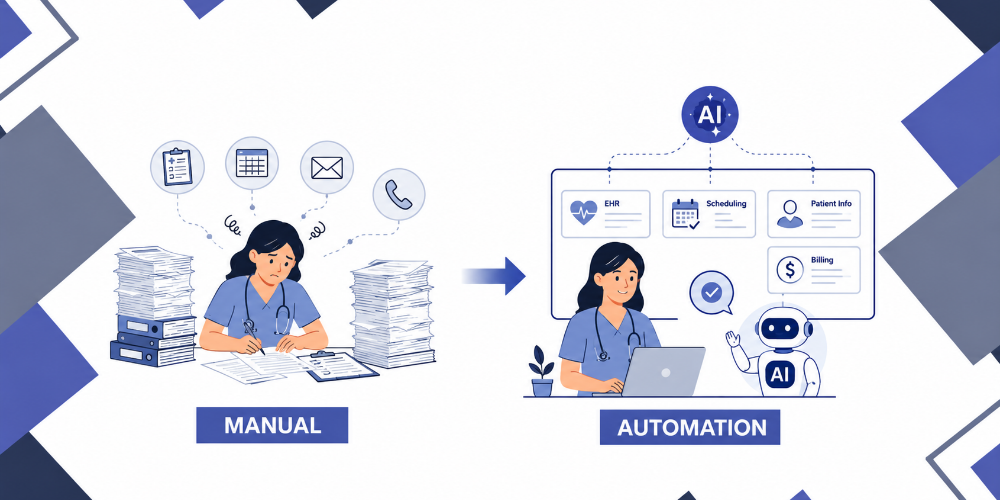
AI automates manual tasks. (source: Internet)
AI can support different roles across healthcare organizations by reducing manual workload and improving operational coordination.
AI Automates Manual Tasks Across Healthcare Roles
AI assists with medical documentation, patient note summaries, appointment preparation, and follow-up reminders, allowing providers to spend more time focusing on patient care.
For nurses and care coordinators
(source: Internet)
AI helps manage patient follow-ups, medication reminders, routine communication, and care coordination workflows, improving continuity of care while reducing administrative burden.
For managers and administrators
(source: Internet)
AI supports scheduling, staff coordination, operational monitoring, reporting, and resource management, helping organizations improve visibility and make faster operational decisions.
For patients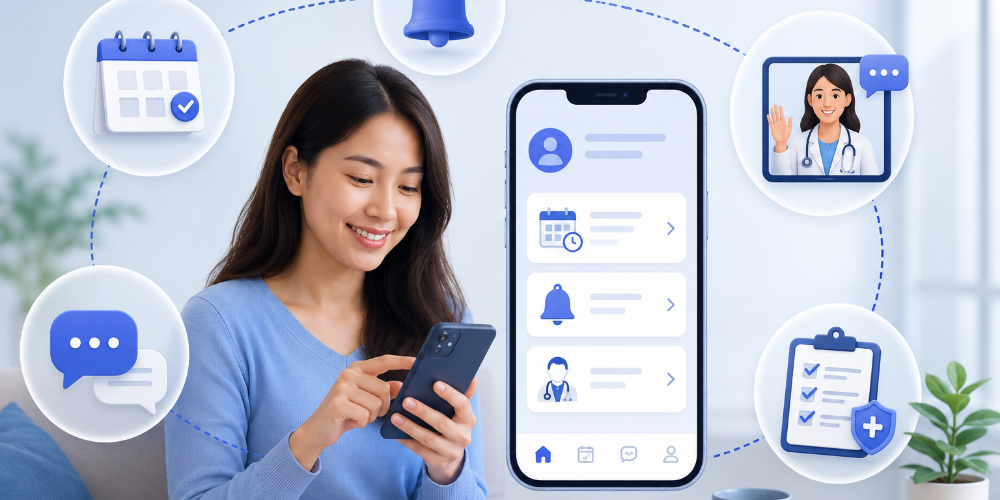
(source: Internet)
AI enables smoother appointment booking, automated reminders, post-treatment guidance, and faster communication with healthcare providers, creating a more connected patient experience.
The Operational Impact of Connected AI
By automating repetitive tasks and optimizing workflows, healthcare organizations can reduce operational friction, improve coordination between departments, and increase overall efficiency.
At the same time, patients benefit from faster responses, more consistent follow-ups, and smoother healthcare experiences throughout their care journey.
As healthcare operations become increasingly complex, AI is evolving from a standalone automation tool into a core operational layer that supports smarter, more connected healthcare systems.
The Future of AI in Healthcare Is Operational Intelligence
The healthcare industry is moving away from isolated AI tools and toward connected AI ecosystems capable of supporting entire operational infrastructures. In the future, AI in healthcare will play a much larger role in operational intelligence and strategic decision-making.
Healthcare organizations are increasingly adopting AI for predictive operational planning, workflow monitoring, proactive care coordination, intelligent resource allocation, and real-time operational visibility. These technologies help organizations identify inefficiencies earlier, improve coordination between departments, and make more data-driven operational decisions.
As AI systems become more integrated into healthcare operations, organizations will gain greater visibility into workflows, patient coordination processes, and operational performance. This shift toward operational intelligence will help healthcare providers become more proactive, scalable, and efficient in an increasingly complex healthcare environment.
Real-World Healthcare AI Case Studies from Lifesup AI
Healthcare organizations are increasingly adopting AI not just for chatbot automation, but to solve deeper operational challenges such as patient follow-up, workflow coordination, fragmented communication, and operational inefficiencies.
At LifeSup AI, we focus on building connected AI systems that support healthcare operations end-to-end. Below are some of the real-world healthcare use cases we are helping organizations solve.
AI-powered customer care & smart patient management solution for medical center
Overview
- The Client: A general clinic currently restructuring its operating model to enhance service quality and deliver a differentiated experience
- Objectives: The clinic aims to build its own technology ecosystem to standardize workflows, centralize data management, and leverage AI to enable automation, personalization, and scalable growth
- Partnership: Lifesup AI partnered with the client to design and deploy a smart customer and patient care ecosystem specifically tailored to the operational needs of a general clinic
USP
- Interconnected, AI-Optimized Ecosystem: A multi-role application model (doctors, nurses, receptionists, patients, and admins) that enables each function to operate more efficiently while ensuring a seamless experience
- Centralized Medical Data Platform: Integrates medical data across systems to ensure consistency, transparency, and easy access for all roles, eliminating fragmented data
- Smart Clinical Assistant for Doctors: Reduces manual tasks related to medical records and clinical data management, supporting the creation of personalized treatment plans
- Automated Post-Visit Engagement: A dedicated app to manage treatment plans and enhance omnichannel interaction between patients and doctors, reducing the workload for nurses and customer care teams
- Healthcare CRM & Specialized Analytics: Provides deep insights through reports and analytics to monitor performance, coordinate operations, and support scalable growth
Read the Case Study now for more details
AI-powered bid processing for medical equipment
Overview
- Vietnam’s healthcare sector is undergoing a profound digital transformation, yet manual tender processing remains a critical bottleneck
- Traditional manual workflows are complex and prone to risks such as data errors, missing information, and prolonged processing times as tender requirements grow in scale
- To address these challenges, Lifesup AI partnered with a leading medical equipment supplier to deploy an AI-powered bid document processing solution
- This system automates the workflow from technical data extraction to intelligent matching and automated quote creation
USP
- Breakthrough Efficiency: Achieves an 80% reduction in document processing time
- High Precision: Reaches 95% technical accuracy across tender submissions
- Automated Data Extraction: AI automatically scans and extracts all technical requirements from uploaded documents to facilitate standardization
- Intelligent Matching: The system performs smart matching between extracted requirements and the company’s internal equipment database
- AI-Driven Validation: Continuously cross-checks data against standards to detect inconsistencies and ensure full technical compliance before submission
- Enterprise-Grade Security: Centralized data management with role-based access control to prevent data leakage
See how LifeSup AI optimized bid processing with AI automation.
At Lifesup AI, we provide comprehensive AI solutions designed to help healthcare organizations optimize operations, streamline workflows, improve patient coordination, and create measurable operational value through connected AI systems. By integrating AI into the core operational structure of healthcare organizations, we help providers move beyond isolated tools and build more efficient, scalable, and patient-centered healthcare operations for the future.
>>Read more: AI in Healthcare: How AI Is Transforming Healthcare Management and Operations