
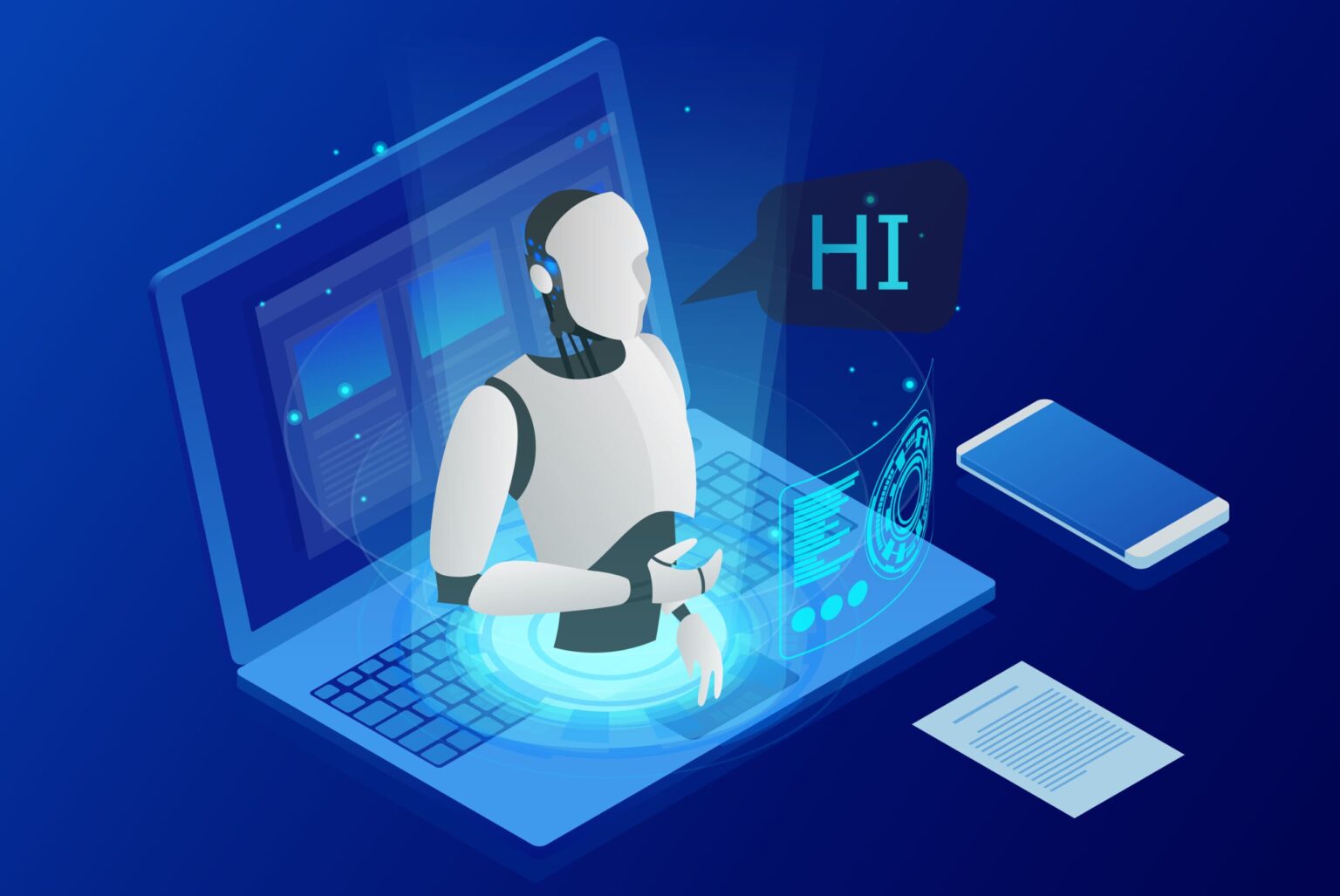
In recent years, AI Teaching Assistants have gained increasing recognition in modern education. By 2026, this technology not only supports teaching but also plays a key role in improving operational efficiency and enhancing the overall learning experience.
Driven by the growing demand for personalized learning, streamlined operations, and consistent teaching quality, AI is becoming an essential part of the education ecosystem. Instead of relying on fragmented tools, many institutions are adopting AI Teaching Assistants as integrated solutions that connect instruction, assessment, engagement, and data analytics.
This shift not only streamlines workflows but also reshapes the role of educators, enabling more flexible and effective learning environments. In this article, we explore what an AI Teaching Assistant is, its key benefits, the top tools in 2026, and how to choose the right solution for long-term success.
What is an AI Teaching Assistant?
An AI Teaching Assistant is an artificial intelligence-powered system designed to comprehensively support both educators and learners throughout the teaching and learning process.
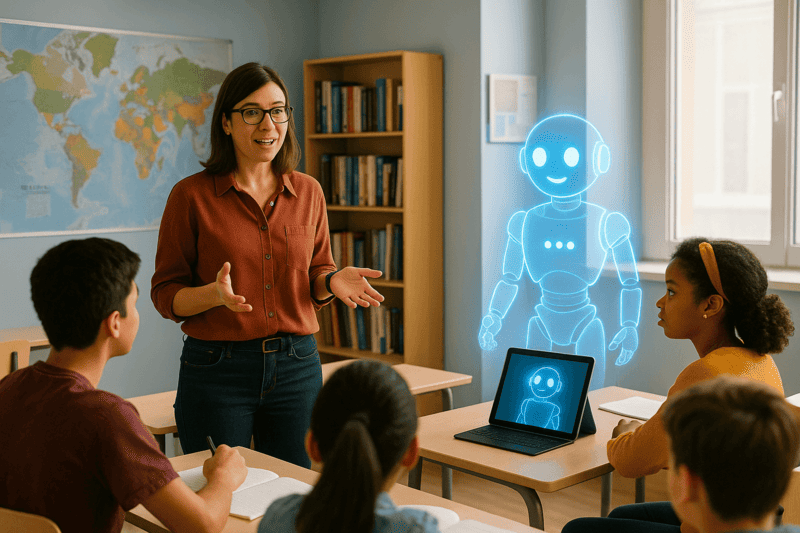
Unlike traditional educational software, which relies on static data and predefined rules, AI Teaching Assistants are dynamic systems capable of understanding context, interpreting user intent, and continuously improving their responses through data-driven learning.
In practice, an AI Teaching Assistant can perform a wide range of functions, such as generating lesson plans aligned with specific learning objectives, assisting with grading in a fast and consistent manner, providing real-time answers to student questions, and tracking learning progress across multiple dimensions. More advanced systems can also analyze learning behaviors, identify knowledge gaps, and recommend targeted improvements.
A key advantage of AI Teaching Assistants is that they enhance teaching efficiency by handling repetitive tasks, allowing educators to focus on instruction and develop more effective teaching strategies.
>> Read more: What Is an AI Assistant? Key Features and Top-Rated AI Assistants in 2026
Benefits of AI Teaching Assistants
AI Teaching Assistants bring many positive benefits to modern education. The specific benefits are as follows:
- Reduce administrative workload: Automate time-consuming tasks such as grading, lesson planning, and reporting, allowing teachers to focus more on teaching.
- Enable personalized learning at scale: Analyze student performance, engagement, and learning patterns to tailor content, adjust difficulty levels, and provide targeted feedback.
- Provide real-time feedback: Support students instantly when they face difficulties, improving understanding, engagement, and learning motivation.
- Improve data-driven decision making: Identify learning trends and classroom patterns to help educators and institutions optimize teaching strategies and outcomes.
- Enhance overall learning experience: Reduce friction in teaching processes and support more meaningful interactions between teachers and students, creating a more effective learning environment.
10 Best AI Teaching Assistant Tools in 2026
Lifesup AI
Lifesup AI represents a shift from fragmented AI usage to a fully integrated education platform. Unlike many tools that focus on a single function, Lifesup AI is designed to support the entire educational lifecycle, from lesson planning and classroom management to performance analytics and institutional operations.
What makes Lifesup AI particularly relevant in 2026 is its ecosystem approach. By embedding AI across multiple layers of the education process, it enables schools to unify their workflows, reduce dependency on multiple disconnected tools, and gain real-time visibility into both teaching and operational performance. This not only improves efficiency but also creates a foundation for scalable, data-driven decision-making.
For institutions that are moving beyond basic AI adoption and looking to build a long-term digital strategy, Lifesup AI offers a more comprehensive and sustainable solution compared to standalone AI Teaching Assistant tools.
ChatGPT (OpenAI)
ChatGPT has become one of the most recognizable AI Teaching Assistants globally, largely due to its versatility and accessibility. It is widely used by both educators and students to generate content, explain complex topics, and provide instant responses to queries.
Its strength lies in its flexibility, making it suitable for a wide range of educational scenarios. However, it is primarily designed for individual use and does not inherently provide the level of system integration required for institutional deployment.
Google Gemini
Google Gemini stands out for its seamless integration within the Google ecosystem. For schools already using Google Workspace, Gemini enhances productivity by enabling AI-powered assistance directly within familiar tools such as Google Docs and Google Classroom.
This tight integration allows for smoother workflows and improved collaboration, making it a practical choice for institutions that prioritize operational convenience and ecosystem compatibility.
Khanmigo

Khanmigo, developed by Khan Academy, is designed to function as a virtual tutor rather than a generic AI tool. Its approach emphasizes guided learning, encouraging students to think through problems rather than simply providing answers.
This makes it particularly effective in subjects that require step-by-step reasoning, such as mathematics and science, and positions it as a valuable complement to classroom instruction.
Eduaide.ai
Eduaide.ai focuses on simplifying lesson planning for educators. By generating structured teaching materials quickly, it helps reduce preparation time while maintaining a high level of content quality.
Gradescope
Gradescope addresses one of the most time-intensive aspects of teaching: grading. Its AI-driven evaluation system ensures consistency and provides detailed insights into student performance, allowing educators to identify patterns and areas for improvement.
Tome
Tome enables educators to create visually engaging presentations with minimal effort. By automating design and content structuring, it helps teachers deliver more impactful lessons without investing excessive time in preparation.
Socratic
Socratic is a student-centric AI Teaching Assistant that leverages image recognition to solve problems and provide explanations. It is particularly useful for independent learning and homework support.
Canva AI
Canva AI enhances the visual aspect of teaching by enabling educators to create high-quality graphics, presentations, and learning materials with ease. Its intuitive interface makes it accessible even for users with no design background.
ClassPoint
ClassPoint focuses on classroom interaction, allowing educators to integrate quizzes and real-time engagement features directly into their presentations. This helps create a more dynamic and participatory learning environment.
How to Choose the Right AI Teaching Assistant
Choosing the right AI Teaching Assistant should be seen as a strategic decision rather than just a feature comparison. First, it is important to clearly define the intended use case. Individual educators often prioritize flexibility and ease of use, while educational institutions focus more on scalability, system integration, and long-term digital transformation.
Another key factor is the level of personalization the AI can provide. Tools that can adapt to individual learning behaviors and needs are more effective in improving student outcomes.
Integration with existing systems is also critical, as disconnected solutions can disrupt workflows and reduce overall efficiency.
Ultimately, the right choice should be based on how well the AI Teaching Assistant aligns with broader educational goals, rather than short-term convenience.
>> Read more: Top free AI tools widely used and best in 2026
Key Considerations When Using AI Teaching Assistants
Alongside its benefits, using AI Teaching Assistants also comes with certain considerations that you need to be aware of.
Data privacy and security
Educational institutions handle sensitive student data, so strict compliance with security and privacy standards is essential to maintain trust and protect information.

Content accuracy and validation
Although AI Teaching Assistants can generate information quickly, it is not always fully accurate. Human oversight is necessary to verify outputs and ensure educational quality.
Redefining the role of educators
AI Teaching Assistants should be viewed as a supportive tool that enhances teaching effectiveness, not as a replacement for teachers. The focus remains on empowering educators.
Training and change management
Effective implementation of AI Teaching Assistants requires proper training and clear guidance. Without a solid understanding of how to use AI correctly, even advanced systems may fail to deliver their full value.
The AI Teaching Assistant is no longer a supplementary tool – it is becoming a foundational component of modern education. As institutions continue to evolve, the focus is shifting from isolated AI applications to integrated ecosystems that connect teaching, learning, and operations.
In this landscape, Lifesup AI represents a forward-looking approach. By combining multiple capabilities into a single platform, it enables schools to move beyond fragmented adoption and build a more cohesive, scalable, and data-driven education system.
For educators and organizations exploring AI Teaching Assistants, the key is not just to adopt technology, but to do so with a clear strategy. Choosing the right solution today will determine how effectively education systems can adapt, grow, and deliver value in the years ahead.
Let Lifesup AI accompany you on your journey of applying AI Teaching Assistants in education, helping to enhance teaching and learning effectiveness in a modern and sustainable way.
Contact Lifesup AI today for consultation and implementation of AI Teaching Assistant solutions as well as comprehensive AI education solutions, designed to optimize operational performance for your educational center or school.