
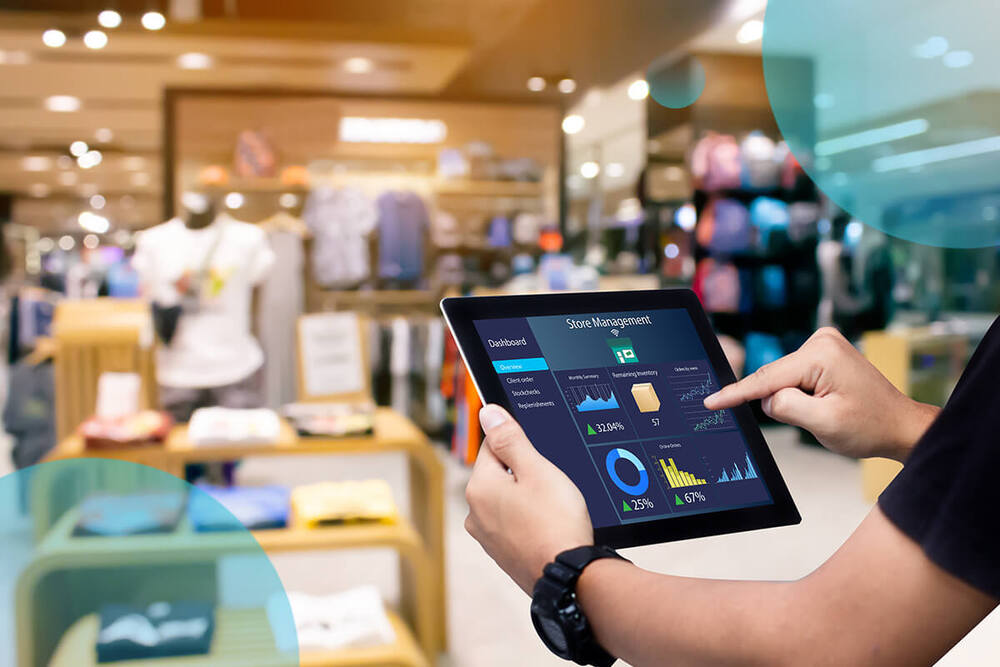
The retail industry is entering a new era defined by data intelligence, personalization, and speed. At the center of this transformation is generative AI in retail – an advanced and transformative category of artificial intelligence that reflects the latest AI trends in detail, empowering organizations to produce original content, uncover meaningful patterns from vast datasets, and enhance decision-making processes beyond the limitations of conventional AI systems.
Unlike conventional AI models that focus primarily on prediction and classification, generative AI produces new outputs: text, recommendations, conversations, simulations, and strategic suggestions. In retail, this capability unlocks unprecedented opportunities to personalize customer journeys, optimize operations, and empower frontline teams.
As consumer expectations rise and competition intensifies, generative AI is rapidly becoming a strategic differentiator for retailers seeking sustainable growth and operational excellence.
How Does Generative AI Benefit the Retail Industry?
- Generative AI in the retail market delivers value across the entire retail value chain by transforming how data is interpreted and acted upon. One of its most significant benefits is the ability to convert complex, fragmented data into meaningful and actionable outputs.
- Retailers operate across multiple channels online, in-store, mobile, and social each generating vast amounts of customer and operational data. Generative AI synthesizes this information to produce insights, recommendations, and content tailored to specific contexts and audiences
- Another critical benefit lies in scalability. Generative AI enables retailers to deliver personalized experiences to millions of customers simultaneously, something that would be impossible through human effort alone. From personalized product descriptions to dynamic promotions, generative AI makes mass personalization economically viable.
- Additionally, generative AI enhances agility. Retail teams can respond faster to market changes, customer behavior shifts, and supply chain disruptions by relying on AI-generated forecasts, scenarios, and recommendations rather than static reports.
Key Applications of Generative AI in Retail
AI Chatbots & Virtual Assistants
- One of the most visible applications of AI adoption in retails is AI-powered chatbots and virtual assistants. Powered by LLMs in retail, these systems go far beyond scripted responses, engaging customers in natural, context-aware conversations.
- Generative AI chatbots can answer product questions, recommend items, handle order inquiries, and resolve issues across multiple channels. For internal teams, virtual assistants support sales staff by providing real-time product knowledge, pricing information, and customer insights during interactions.
- This dual-facing capability enhances both customer satisfaction and employee productivity, creating a more responsive and intelligent retail ecosystem.
Hyper-Personalization for Customers
- Hyper-personalization is a defining advantage of generative AI in retail. By analyzing browsing behavior, purchase history, preferences, and contextual signals, generative AI creates highly tailored product recommendations and content.
- Instead of generic offers, customers receive personalized suggestions, messages, and experiences that reflect their unique needs and intent. Generative AI can dynamically adjust tone, language, and product framing, making each interaction feel relevant and human.
- This level of personalization drives higher engagement, increased conversion rates, and stronger brand loyalty.
Marketing Optimization
- Generative AI is transforming retail marketing by automating and optimizing content creation at scale. Retailers use generative AI to produce marketing copy, email campaigns, product descriptions, and promotional messages aligned with brand voice and customer segments.
- More importantly, generative AI enables continuous optimization. Marketing teams can test variations, analyze performance, and refine messaging in near real time.
- This data-driven creativity allows retailers to maximize ROI while reducing time-to-market for campaigns.
- In an increasingly crowded digital landscape, generative AI gives retailers a competitive edge in capturing attention and driving action.
Elevating Customer Experience
- Customer experience is no longer defined solely by product quality or price. It is shaped by how seamlessly customers interact with a brand across touchpoints. Generative AI in retail elevates customer experience by ensuring consistency, relevance, and responsiveness.
- AI-generated responses and recommendations adapt to customer context, whether online or in-store. For example, sales associates supported by generative AI receive suggested talking points and product matches tailored to each customer, enhancing human interaction rather than replacing it.
- This approach bridges digital intelligence with human empathy, creating experiences that are both efficient and emotionally resonant.
Inventory & Supply Chain Management
- Beyond customer-facing use cases, generative AI plays a critical role in inventory and supply chain optimization. By analyzing historical data, demand patterns, and external factors, generative AI generates forecasts and scenarios that help retailers make informed stocking decisions.
- Retailers can simulate outcomes such as promotions, seasonal shifts, or supply disruptions, enabling proactive planning rather than reactive response. This reduces overstocking, minimizes stockouts, and improves overall supply chain resilience.
- Generative AI transforms inventory management from a reactive process into a strategic capability.
Streamlining Operational Efficiency
- Operational complexity is a major challenge in retail, particularly for multi-store or omnichannel businesses. Generative AI streamlines operations by automating reporting, summarizing performance data, and generating actionable insights for managers.
- Instead of manually analyzing dashboards, retail leaders can ask questions in natural language and receive AI-generated summaries and recommendations. This reduces cognitive load and accelerates decision-making across departments
- As a result, generative AI enables leaner operations while maintaining high levels of control and visibility.
Read more:
05 Key applications of AI in the F&B inudustry to enhance customer experience
Real-World Case Studies of GenAI in Retail
Lifesup AI – Generative AI for Personalized Sales Consultation
- Lifesup AI is a standout example of how generative AI in retail and E-commerce can be applied directly to sales and customer engagement. Rather than focusing solely on automation, Lifesup AI uses generative AI to empower sales teams with real-time intelligence.
- Lifesup AI’s generative models analyze customer data, interaction history, and product attributes to generate personalized sales recommendations and conversation guidance. This allows sales staff both online and in-store to deliver tailored consultations that increase conversion rates and customer satisfaction.
- By embedding generative AI into the sales process, Lifesup AI bridges the gap between data analytics and human interaction, creating scalable personalization without losing the human touch.
Amazon – Generative AI for Product Content and Recommendations
- Amazon leverages generative AI to create and optimize product descriptions, enhance recommendations, and support customer interactions. Generative models help standardize and personalize content across millions of listings, improving discoverability and customer understanding.
- This use of generative AI in retail demonstrates how content generation at scale can drive operational efficiency and customer trust simultaneously.

source: CafeF
Walmart – AI-Driven Customer Engagement and Forecasting
- Walmart applies generative AI to customer support, merchandising insights, and demand forecasting. AI-generated summaries and recommendations help teams respond faster to market trends and customer needs.
- By integrating generative AI into both front-end and back-end processes, Walmart enhances agility across its global retail operations.

Limitations and Challenges of Implementing Generative AI
- Despite its potential, generative AI in retail comes with challenges that retailers must address carefully.
- Data quality and governance are foundational concerns. Generative AI models rely heavily on accurate, representative data. Poor data quality can lead to misleading outputs or biased recommendations.
- Another challenge is trust and transparency. Retail teams and customers must understand how AI-generated recommendations are produced to build confidence in their use. Without transparency, adoption may be limited.
- Integration complexity is also a barrier. Embedding generative AI into existing retail systems requires technical expertise and change management. Retailers must invest in infrastructure and skills to fully realize AI value.
- Finally, ethical considerations such as privacy, bias, and responsible AI usage must be addressed proactively to ensure long-term sustainability.
The Future of Generative AI in Retail: What’s Next?
- The future of generative AI in retail points toward deeper integration, greater autonomy, and stronger collaboration between humans and AI.
- We will see generative AI evolve into intelligent retail agents capable of managing end-to-end processes, from customer engagement to inventory planning. These agents will operate continuously, learning from outcomes and improving over time.
- Personalization will become more predictive and proactive, with AI anticipating customer needs before they are explicitly expressed. At the same time, generative AI will increasingly support strategic decision-making, helping leaders simulate scenarios and evaluate options.
- Retailers that invest early in generative AI capabilities will be better positioned to adapt to rapid change and build resilient, customer-centric organizations.
Conclusion
Generative AI in retail is reshaping how retailers engage customers, optimize operations, and compete in a data-driven economy. By moving beyond prediction to generation, this technology unlocks new levels of personalization, efficiency, and strategic insight.
From personalized sales consultation powered by Lifesup AI to global leaders like Amazon and Walmart, real-world applications demonstrate that generative AI is no longer experimental – it is transformational.
👉 Ready to explore how generative AI can elevate your retail business? Discover intelligent, human-centric AI solutions at LIFESUP AI