

In recent years, we’ve witnessed a profound shift in virtually all industries, driven by artificial intelligence (AI) technologies. From transforming customer service to revolutionizing supply chain management, AI’s ability to streamline processes and provide actionable insights is unparalleled.
Yet, despite AI’s broad spectrum of applications, the responsibility for its successful integration has largely been placed on IT departments. A new study from Freshworks reveals that 40% of employees believe the IT department spearheads AI policy and implementation, while business leaders lag far behind at 23%.
This raises a critical question: Given today’s technological advances and AI’s potential value proposition, shouldn’t business leaders be at the forefront of AI integration?
The Crucial Role of Business Leaders in AI Integration
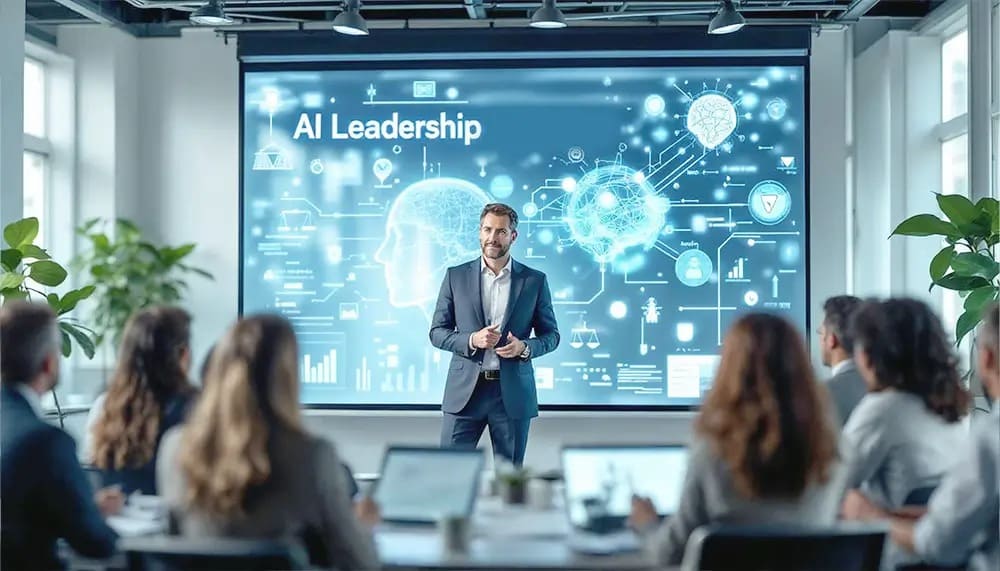
The truth is – AI is not just another technological advancement, it’s a game-changer that can redefine your business strategy, customer engagement, and operational efficiency. According to Korn Ferry, over 82% of CEOs and senior leaders believe that AI will have an extreme to significant impact on their business.
While IT teams handle AI’s technical aspects, strategic AI deployment requires leadership that balances human and business considerations. Effective AI leadership means embedding AI into core strategy and decision-making.
So why should business leaders take charge of AI integration?
First, AI drives innovation and efficiency, directly impacting long-term goals and competitive advantage. Leadership oversight ensures AI initiatives align with strategic vision and deliver maximum value.
Second, AI reveals insights beyond traditional methods. Through predictive analytics and machine learning, leaders can make better decisions and enhance leadership effectiveness.
Ultimately, successful AI integration is not just about technology—it requires a culture that embraces change and continuous learning. Leaders must inspire teams to adopt new ways of working and move together through the AI transformation.
How to build AI leadership to drive business growth
To transform AI from a technical concept into a growth engine, leadership capacity must be elevated through a multifaceted strategy:
Enhancing Leadership Development in AI
Leading in the AI era goes beyond mere awareness; it requires translating knowledge into practical skills through three core pillars:
- Building Foundational AI Knowledge: Leaders do not need to become programmers, but they must understand the operational principles of core technologies like Machine Learning, Big Data, and Generative AI. This literacy enables you to identify potential and limitations, ensuring sound investment decisions. An effective approach is implementing Reverse Mentoring, pairing seasoned executives with young AI experts to bridge the knowledge gap.
- Mastering AI Applications: Beyond theory, leaders should directly master administrative AI tools, such as predictive analytics and process optimization. By demonstrating breakthrough performance through AI, you create a powerful influence across the entire organization.
- Encouraging AI Integration at Work: A true AI leader fosters creativity. By building a “psychologically safe” environment where experimentation is welcomed and successful AI initiatives are rewarded, you transform AI into a powerful partner in daily operations.
Building a Community of AI-Driven Leaders
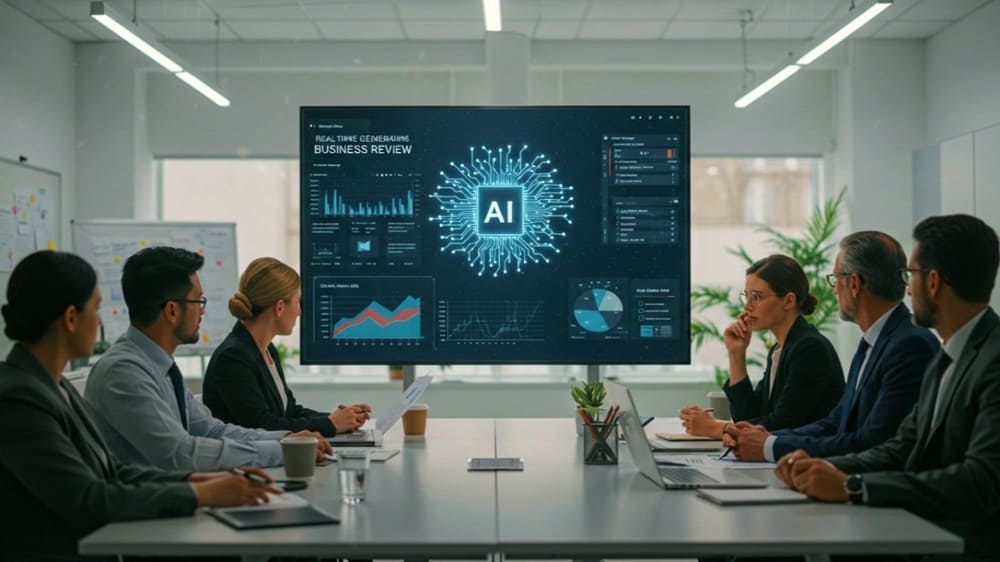
AI leadership is not a solo endeavor. It requires breaking down departmental silos to build a network of like-minded leaders. Establishing cross-functional core teams ensures that AI projects are viewed through multiple lenses—from finance and HR to operations. Regular workshops and discussion forums not only enhance collective intelligence but also create a support system that helps the business adapt flexibly to technological shifts.
Cultivating an AI-First Corporate Culture
Leaders must inspire teams to embrace AI as an ally rather than a threat. Invest in developing the next generation of talent through hands-on training and 1-1 coaching. By fostering an “AI-First” culture where employees proactively optimize their work with technology, innovation will occur naturally and sustainably.
Bridging the Gap Between IT and Business Strategy
The AI leader acts as a strategic “bridge,” translating technical AI capabilities into tangible business values, such as cost optimization or personalized customer experiences. This close alignment ensures that every AI project remains grounded in reality and contributes directly to the company’s competitive advantage.
Establishing Ethical AI Governance & Trust
Sustainable growth is built on trust. Because AI can inadvertently perpetuate bias or pose security risks, leaders must establish rigorous ethical standards – ranging from human oversight to transparent decision-making. Ensuring accountability not only safeguards your brand reputation but also builds absolute trust with customers.

Read more: The Pros and Cons of AI: How Artificial Intelligence Will Change Our Lives
Challenges in Implementing AI Leadership
Leading an organization through the AI era involves three core challenges:
- Psychological Barriers: The fear of displacement often triggers employee resistance. Leaders must implement transparent communication strategies and clear training roadmaps to rebuild trust and alignment.
- Infrastructure and Talent: AI demands high-quality data and specialized expertise. However, fragmented data silos and a global talent shortage force leaders to simultaneously tackle infrastructure investment and workforce upskilling.
- Ethics and Investment Efficiency: Ensuring that AI operates transparently and without bias is a significant responsibility. Furthermore, since AI requires substantial upfront costs while the Return on Investment (ROI) often lags, leaders need the resilience to maintain long-term strategic goals under short-term financial pressure.
The Future of Leadership in the AI Era
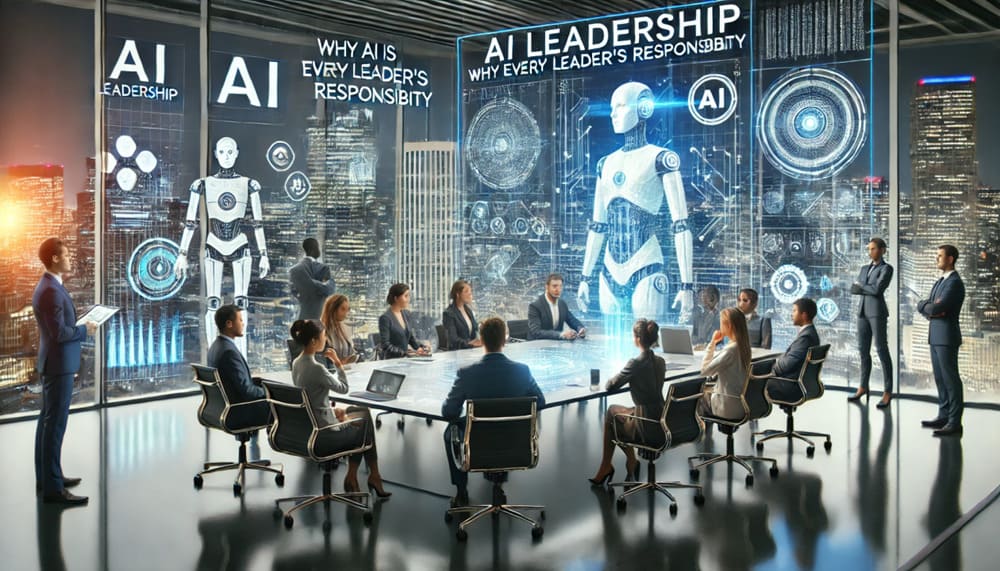
Future business success will depend not only on adopting the latest AI tools but on a fundamental shift in leadership mindset. The managerial role is transitioning from direct control to support and empowerment. As AI automates routine tasks, leaders gain the bandwidth to focus on high-level strategic planning and cultivating human relationships, allowing organizations to stay ahead of challenges and seize emerging technological opportunities.
Modern managers must become “change leaders,” balancing operational stability with continuous organizational transformation. As machines handle data processing, soft skills—such as emotional intelligence, active listening, and clear communication—become more vital than ever. These human-centric values are essential for connecting teams and navigating complex transitions.
Furthermore, AI will revolutionize leadership development through hyper-personalized learning. By analyzing individual needs and styles, organizations can tailor training programs to maximize each leader’s potential. Technologies like Virtual Reality (VR) and Augmented Reality (AR) will further enhance this by providing immersive environments for real-world leadership simulations.
In conclusion, AI integration is a mandatory requirement for all leadership levels, not just the IT department. By proactively engaging in this process, enhancing expertise, and building AI-literate communities, you ensure your organization remains competitive and innovative in the age of artificial intelligence.
Lifesup AI is honored to accompany businesses on their digital transformation journey! Contact Lifesup AI today for expert consultation and a solution demo to effectively optimize performance and boost your sales!
Read more: Top 7 AI Solution Providers You Should Know in 2026