

Discover how AI in education is transforming personalized learning, student engagement, assessment, and academic performance. Explore key applications, benefits, and future trends of AI-powered education.
AI in education is transforming education by making learning more personalized, accessible, and effective. As classrooms become increasingly digital, schools, universities, and online learning platforms are leveraging AI in education to adapt educational content to individual student needs while improving teaching efficiency.
From personalized learning pathways and intelligent tutoring systems to automated grading and learning analytics, AI helps educators deliver better learning experiences and achieve stronger educational outcomes. This article explores the key applications, benefits, challenges, and future potential of AI in education.
What Is AI in Education?
AI in education refers to the use of artificial intelligence technologies such as machine learning, natural language processing (NLP), predictive analytics, and intelligent automation to enhance teaching, learning, and educational administration.
These technologies analyze large volumes of educational data to identify learning patterns, personalize content delivery, automate repetitive processes, and support decision-making. Rather than replacing teachers, AI acts as an intelligent assistant that helps educators deliver more effective and individualized learning experiences. As adoption continues to grow, AI in education is becoming a key driver of innovation across K-12 schools, higher education institutions, and online learning environments.
Why Personalized Learning Matters
Every student learns differently. Some grasp concepts quickly, while others require additional guidance and practice. Traditional classroom models often follow a standardized curriculum that may not adequately address individual learning needs.
Personalized learning aims to tailor educational experiences based on a student’s learning pace, strengths and weaknesses, interests and preferences, academic goals, and engagement levels. By considering these factors, educators can create learning experiences that better align with each student’s unique needs and abilities.
However, delivering personalized education at scale can be challenging for educators. This is where AI in education provides significant value by continuously analyzing student data and adapting learning experiences in real time, ensuring that each learner receives the right support at the right moment.
6 Applications of AI Transforming Education
1. Personalized Learning Pathways
One of the most impactful applications of AI in education is personalized learning. AI systems analyze student behavior, assessment results, learning progress, and engagement patterns to create customized learning journeys. Based on individual performance, the platform can recommend:
- Relevant learning materials: Content that matches the student’s current knowledge level and learning objectives.
- Additional exercises: Extra practice activities designed to strengthen areas where improvement is needed.
- Skill reinforcement activities: Targeted exercises that help students build a deeper understanding of key concepts.
- Advanced coursework: Higher-level learning opportunities for students who are ready to move beyond standard curriculum requirements.
Instead of following a one-size-fits-all curriculum, students receive content tailored to their unique needs, helping them learn more effectively and confidently. This approach improves knowledge retention, increases student engagement, delivers better learning outcomes, and reduces learning gaps, creating a more effective and personalized educational experience.
2. Intelligent Tutoring Systems
AI-Powered Intelligent Tutoring Systems ( Source: Internet )
AI-powered tutoring systems provide personalized academic support outside traditional classroom hours. These virtual tutors can answer questions, explain concepts, guide problem-solving processes, and provide instant feedback. Unlike human tutors with limited availability, AI tutors can support students 24/7.
By identifying areas where students struggle, intelligent tutoring systems can offer targeted assistance and additional practice opportunities. As a result, learners benefit from continuous learning support, greater accessibility, faster problem resolution, and enhanced confidence, helping them stay on track and achieve their academic goals. These capabilities demonstrate how AI in education can extend learning support beyond the traditional classroom and improve student success.
3. Automated Assessment and Grading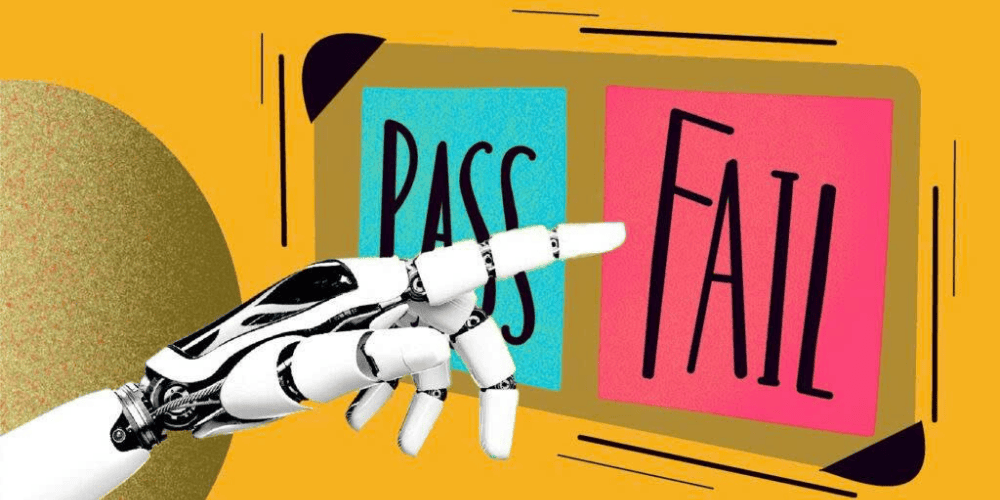
AI-Powered Automated Assessment and Grading ( Source: Internet )
Evaluating assignments, quizzes, and exams is often time-consuming for educators. AI can automate many assessment tasks while maintaining consistency and accuracy.
AI-powered grading systems can:
- Evaluating multiple-choice tests: Quickly assess objective questions while reducing manual grading efforts.
- Assessing short-answer responses: Use natural language processing to identify correct answers and key concepts.
- Analyzing written assignments: Review structure, grammar, and content quality to support more consistent evaluation.
- Providing immediate feedback: Help students understand mistakes and improve performance faster.
- Tracking academic progress: Monitor student development over time and identify important learning trends.
Automated grading allows teachers to spend less time on administrative work and more time engaging with students. Through automated assessment, AI in education helps institutions improve efficiency while maintaining consistent evaluation standards. In addition to reducing grading workloads, AI enables faster feedback cycles, ensures consistent evaluation standards, and improves teacher productivity, creating a more efficient assessment process.
4. Early Identification of At-Risk Students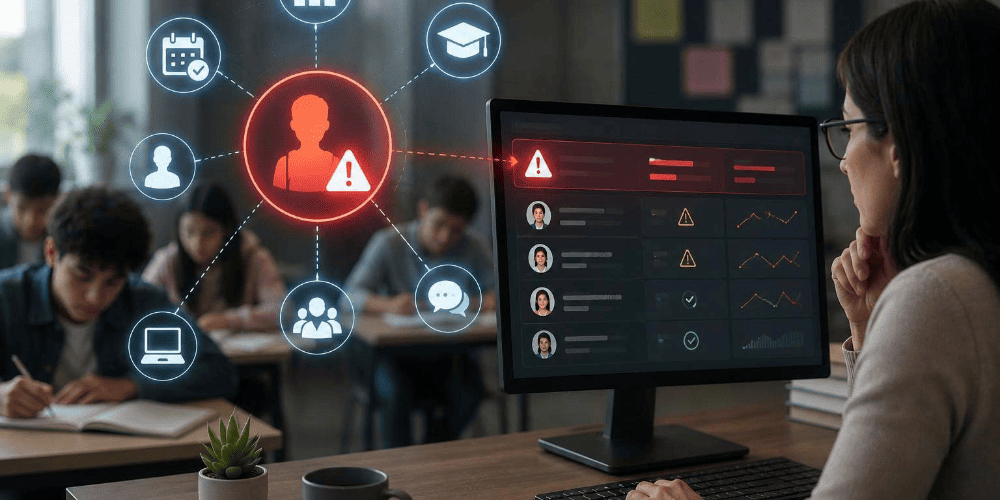
AI-Powered Student Risk Detection ( Source: Internet )
AI can help educational institutions proactively identify students who may be at risk of academic failure, disengagement, or dropout. By analyzing factors such as:
- Attendance records: Reveal patterns of absenteeism or declining participation that may indicate potential challenges.
- Assignment completion rates: Show whether students are consistently keeping up with coursework requirements.
- Test scores: Highlight academic strengths and areas that may require additional intervention.
- Learning activity data: Measure how frequently students engage with educational content and learning platforms.
- Participation patterns: Evaluate engagement in classroom discussions, group activities, and online learning environments.
AI models can detect warning signs early and alert educators before problems escalate. This enables timely interventions, personalized support, and improved student retention. Early identification allows institutions to provide better academic support, improve student success rates, increase retention levels, and foster stronger educational outcomes overall.
5. AI-Powered Learning Analytics
Educational institutions generate vast amounts of learning data, and AI transforms this information into actionable insights that support better educational decision-making.
Learning analytics platforms help educators understand:
- Student performance trends: Provide insights into academic progress and achievement patterns over time.
- Classroom engagement levels: Measure how actively students participate in learning activities.
- Course effectiveness: Identify which teaching methods and educational resources generate the best outcomes.
- Learning bottlenecks: Highlight concepts and topics where students commonly struggle.
- Curriculum improvement opportunities: Support continuous enhancement of educational programs and learning experiences.
These insights support data-driven decision-making and continuous educational improvement. By leveraging AI-powered analytics, institutions can enhance instructional strategies, improve curriculum design, allocate resources more effectively, and support data-driven academic planning.
6. Administrative Automation
AI-Powered Administrative Automation ( Source: Internet )
Beyond teaching and learning, AI can streamline administrative processes across educational institutions. AI-powered automation can assist with:
- Student enrollment: Streamline application reviews, admissions processes, and registration workflows.
- Class scheduling: Automatically create timetables while optimizing resource allocation.
- Attendance tracking: Monitor student participation through digital attendance systems.
- Student inquiries: Deliver instant responses through AI-powered chatbots and virtual assistants.
- Document management: Organize, retrieve, and maintain educational records more efficiently.
- Academic record processing: Reduce paperwork while improving administrative accuracy and compliance.
Reducing administrative burdens allows institutions to operate more efficiently while improving student and staff experiences. The result is greater operational efficiency, reduced manual workloads, faster service delivery, and lower administrative costs that contribute to smoother institutional operations.
Key Benefits of AI in Education
Improved Learning Outcomes
Enhanced Learning Outcomes Through AI ( Source: Internet )
Personalized learning experiences help students better understand concepts, stay engaged, and achieve stronger academic performance. By adapting content and learning methods to individual needs, AI enables students to progress at their own pace and achieve better results.
Increased Student Engagement
Engaged Learning Environment ( Source: Internet )
Interactive AI-driven content, adaptive learning systems, and intelligent feedback mechanisms make learning more engaging and motivating. Students are more likely to remain focused and actively participate when educational experiences are tailored to their interests and abilities.
Greater Accessibility
AI technologies support diverse learning needs, including students with disabilities, language barriers, or different learning preferences. Features such as speech recognition, real-time translation, and adaptive interfaces help make education more inclusive and accessible.
Enhanced Teacher Effectiveness
AI-Powered Teaching Excellence ( Source: Internet )
By automating repetitive tasks and providing data-driven insights, AI enables educators to focus on teaching, mentoring, and student development. This allows teachers to dedicate more time to meaningful interactions and personalized support.
Scalable Personalization
AI makes it possible to deliver individualized learning experiences to large numbers of students without significantly increasing teaching resources. As a result, institutions can provide high-quality personalized education while maintaining efficiency and scalability.
Challenges of Implementing AI in Education
While AI in education offers substantial benefits, successful implementation requires careful planning and governance. Educational institutions must address technical, ethical, and operational considerations to maximize the value of AI while minimizing potential risks.
Data Privacy and Security
Educational institutions must ensure that student data is collected, stored, and processed securely while complying with privacy regulations. Strong cybersecurity measures and transparent data policies are essential for maintaining trust and protecting sensitive information.
Technology Integration
Integrating AI solutions with existing learning management systems (LMS) and educational platforms can present technical challenges. Institutions may need to invest in infrastructure upgrades and system compatibility to ensure seamless implementation.
Teacher Training and Adoption
Educators need adequate training and support to effectively utilize AI-powered tools within their teaching practices. Without proper guidance, even advanced technologies may fail to deliver their full potential in the classroom.
Algorithm Bias
AI systems must be designed and monitored to minimize bias and ensure fair treatment of all learners. Regular audits and diverse training datasets can help improve accuracy and promote equitable educational outcomes.
The Future of AI in Education
As AI technology continues to advance, it will play an even greater role in creating adaptive and personalized learning experiences. Future innovations will help educators better understand student needs, improve engagement, and deliver more effective learning outcomes while maintaining the essential role of human teachers.
Emerging developments such as AI-powered virtual assistants, predictive learning analytics, immersive learning environments, and real-time curriculum adaptation are expected to further transform education. Rather than replacing educators, AI will continue to serve as a powerful tool that enhances teaching effectiveness and supports lifelong learning.
Conclusion
AI is reshaping education by enabling personalized learning, improving student engagement, and streamlining educational processes. By adopting AI strategically, educational institutions can enhance learning outcomes and create more efficient, student-centered environments for the future.
As technology continues to evolve, organizations that embrace AI-driven educational solutions will be better positioned to meet the changing needs of learners, educators, and institutions. The combination of human expertise and intelligent technology has the potential to create a more inclusive, effective, and scalable education system.
Learn how Lifesup AI can help create more personalized and effective learning experiences. Contact us to explore the possibilities
>>Read more: 5 Advantages and disadvantages of AI in education for teachers and students