
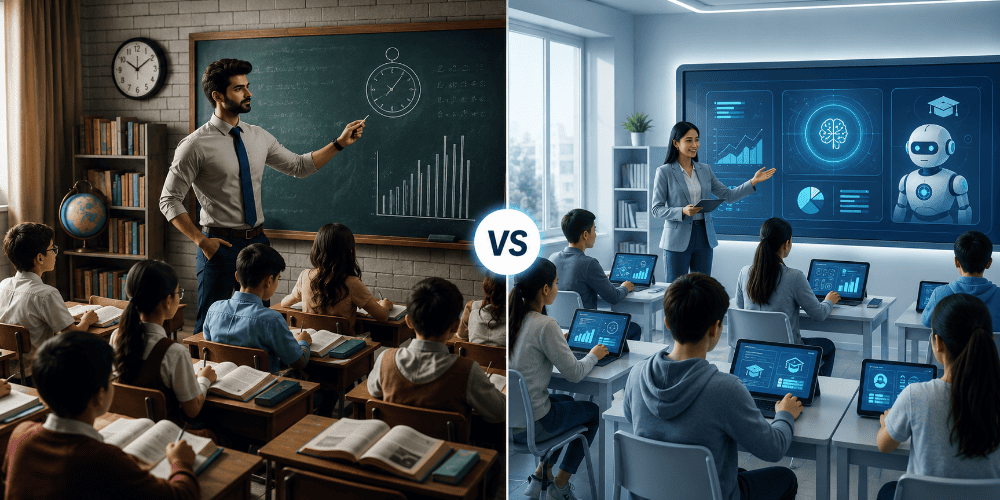
Artificial intelligence is rapidly reshaping how we live and work, and education is one of the fields experiencing the most visible transformation. From smart tutoring systems to automated grading tools, AI in education is becoming more common in classrooms and online learning platforms around the world.
However, this shift does not mean traditional education is disappearing. Instead, it raises an important question: what is actually changing in the way we teach and learn? To understand this, we need to look at how AI and traditional education differ, and how they are starting to work together.
What Is Traditional Education?
Traditional education is the learning model that has been used for decades in schools and universities. In this approach, teachers deliver lessons in classrooms, students follow the same curriculum, and learning is often based on lectures, textbooks, assignments, and scheduled examinations.
Traditional education offers several important advantages. Teachers can observe students’ emotions, encourage classroom discussions, answer questions immediately, and build meaningful relationships with learners. Face-to-face interaction also helps students develop communication, teamwork, and social skills.
However, traditional education has its limitations. Since one teacher may be responsible for dozens of students, it can be difficult to provide personalized instruction for every learner. Students who learn more slowly may struggle to keep up, while advanced learners may not feel sufficiently challenged. In addition, teachers spend a significant amount of time grading assignments, preparing lesson plans, and completing administrative work.
What Is AI in Education?
AI in education refers to the use of artificial intelligence technologies to support teaching, learning, assessment, and educational management. Rather than replacing teachers, AI works as an intelligent assistant that helps both educators and students achieve better learning outcomes.
Today, AI can generate lesson materials, create quizzes, recommend personalized learning resources, provide instant feedback, analyze student performance, and automate routine administrative tasks. Many educational platforms also use AI to adapt learning content based on each student’s progress, allowing learners to study at their own pace.
As AI technology continues to advance, educational institutions are finding more opportunities to improve efficiency while creating a more engaging learning experience.
AI in Education vs Traditional Education: Key Differences
Although both approaches share the same goal of helping students learn, they differ significantly in how learning is delivered, assessed, and managed. Traditional education has long relied on classroom instruction and teacher-led activities, while AI in education introduces intelligent technologies that create more personalized and flexible learning experiences. The following comparisons highlight the key areas where these two approaches differ.
Personalized Learning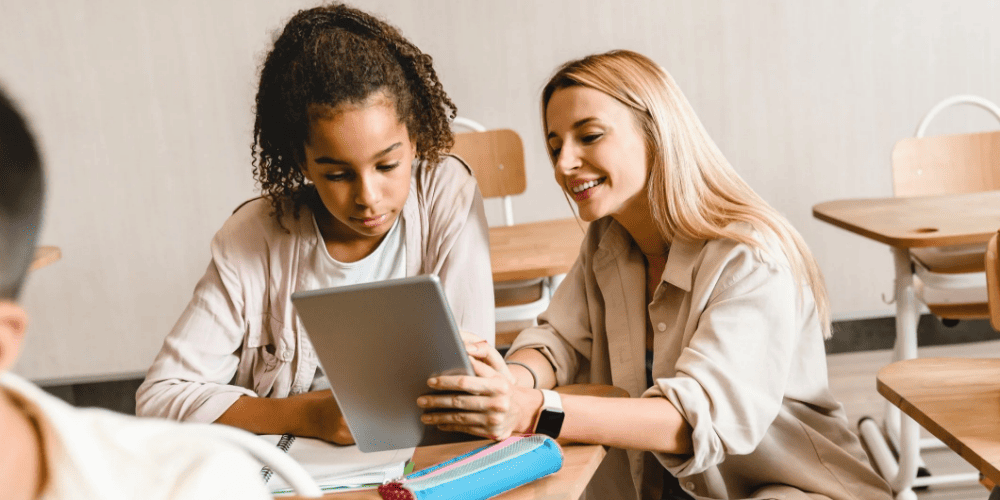
AI-Powered Personalized Learning: How Technology Adapts Education to Each Student’s Needs (Source: Internet)
One of the biggest differences between AI in education and traditional education is the level of personalization. Every student has unique learning abilities, interests, and challenges, but providing individualized instruction in a classroom can be difficult when one teacher is responsible for many students.
In traditional education, teachers usually deliver the same lesson to the entire class. While experienced educators often adapt their teaching methods when possible, limited class time and large class sizes make it challenging to meet every student’s individual needs.
By contrast, AI in education analyzes learning behavior, identifies strengths and weaknesses, and recommends content tailored to each learner. Students who need additional practice can receive extra exercises, while advanced learners can move ahead without waiting for the rest of the class. This personalized approach helps improve learning efficiency and keeps students engaged throughout their educational journey.
Learning Pace
Another major difference lies in the pace of learning. Students do not learn at the same speed, yet traditional classrooms typically follow a fixed schedule designed for the entire class. This means some students may struggle to keep up, while others may feel they are progressing too slowly.
Traditional education usually requires all students to complete lessons within the same timeframe, regardless of their individual learning progress. Teachers may provide additional support outside class, but time constraints often limit how much personalized assistance they can offer.
With AI in education, learning becomes much more flexible. AI-powered platforms allow students to study at their own pace, revisit difficult concepts whenever necessary, or skip topics they have already mastered. This adaptive learning experience reduces frustration, increases confidence, and helps students achieve better learning outcomes.
Feedback and Assessment
AI-Powered Learning Pace: Flexible Education for Every Student’s Needs (Source: Internet)
Assessment is another area where AI in education is transforming the learning experience. Timely feedback allows students to identify mistakes early and improve their understanding before moving on to new topics.
In traditional education, grading assignments, quizzes, and exams often requires significant manual effort from teachers. As a result, students may wait several days before receiving feedback, especially in large classes.
AI-powered assessment tools can evaluate quizzes and objective tests almost instantly. Some advanced systems also provide explanations for incorrect answers, identify learning gaps, and recommend additional study materials. Instead of simply receiving a score, students gain actionable feedback that helps them improve continuously.
Teacher Workload
Teachers have responsibilities that extend far beyond classroom instruction. In addition to teaching lessons, they prepare learning materials, grade assignments, record attendance, write reports, and manage various administrative tasks.
These routine activities are essential but also consume valuable time that could otherwise be spent interacting with students. As educational demands continue to increase, managing these responsibilities becomes even more challenging.
AI in education helps reduce this workload by automating repetitive tasks such as grading, attendance tracking, lesson planning assistance, and administrative documentation. Rather than replacing teachers, AI enables educators to spend more time mentoring students, designing engaging lessons, and providing personalized academic support.
Student Engagement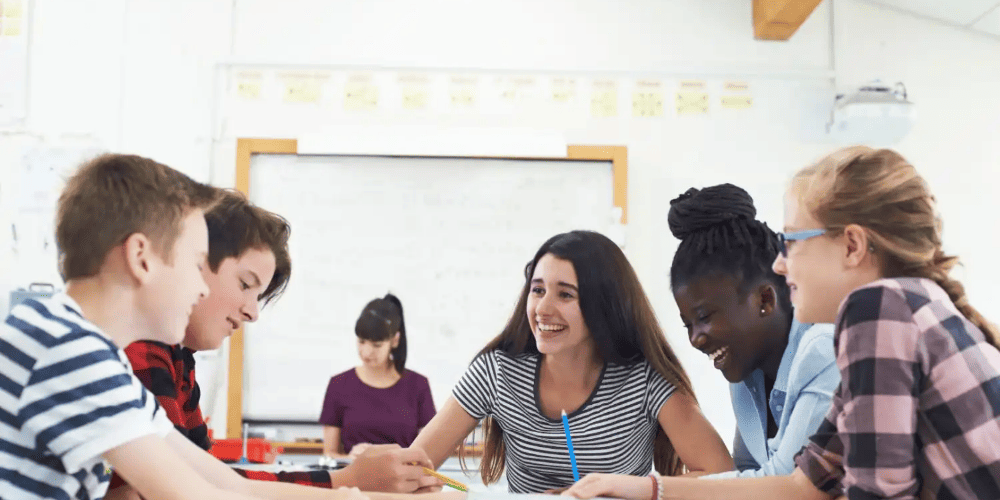
Students Engaging in Collaborative and Interactive Learning Supported by Modern Educational Technologies ( Source : Internet )
Keeping students engaged throughout the learning process has always been a challenge for educators. Modern learners are increasingly familiar with digital technologies and often expect more interactive learning experiences than traditional lectures alone can provide.
Traditional education commonly relies on textbooks, classroom discussions, and teacher-led instruction. While these methods remain valuable, they may not always capture every student’s attention or accommodate different learning preferences.
AI in education introduces more interactive learning experiences through virtual tutors, adaptive quizzes, educational games, simulations, and AI-powered chatbots. These technologies encourage active participation and provide immediate assistance whenever students encounter difficulties, making learning more engaging and motivating.
Accessibility and Learning Resources
Access to learning resources is another important difference between traditional education and AI in education. In conventional classrooms, students typically depend on textbooks, printed materials, scheduled lessons, and the availability of their teachers for additional support.
Although many schools now provide digital resources, students may still face limitations outside classroom hours or have difficulty finding materials that match their learning needs.
With AI in education, students can access personalized learning resources anytime and from almost anywhere. AI-powered tutors, intelligent search systems, and recommendation engines suggest relevant articles, videos, exercises, and practice questions based on each student’s progress. This creates a more flexible learning environment that extends beyond the classroom.
Data-Driven Decision Making
Traditional education often evaluates student performance using test scores, classroom participation, homework, and teachers’ observations. While these methods remain valuable, they may not always reveal long-term learning patterns or identify struggling students early enough.
One of the strengths of AI in education is its ability to analyze large amounts of learning data. AI systems can identify trends, predict academic risks, monitor student engagement, and recommend targeted interventions before learning problems become more serious.
These insights help teachers make more informed instructional decisions while enabling schools to improve curriculum planning, student support services, and overall educational outcomes.
Where Traditional Education Still Has the Advantage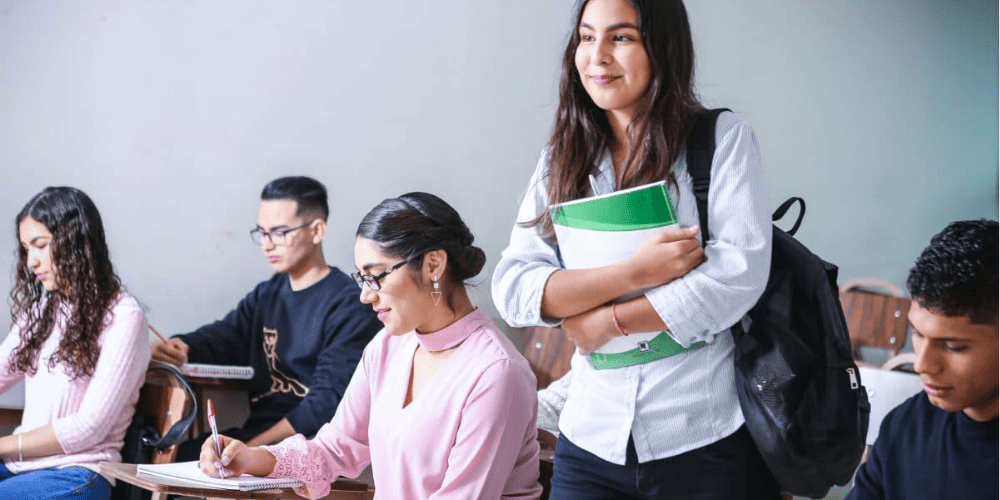
Despite the rapid growth of AI, traditional education continues to offer strengths that technology cannot fully replicate. While AI has improved efficiency and personalized learning, education is about more than delivering information. It also involves building trust, developing character, and helping students grow through meaningful human interactions.
For this reason, traditional education remains an essential part of the learning experience. Many of its strengths are rooted in human communication and emotional understanding, areas where AI still has clear limitations.
Traditional education continues to excel in several important areas:
- Building meaningful relationships: between teachers and students, creating trust, guidance, and long-term academic support.
- Emotional and social development: supporting students’ emotional, social, and behavioral growth through real human interaction.
- Teamwork and communication skills: encouraging collaboration, leadership, and effective communication in group settings.
- Hands-on learning experiences: creating practical learning through classroom activities, experiments, and in-person discussions.
- Personalized human encouragement: providing motivation and support based on empathy, intuition, and real understanding of each student.
These advantages are difficult for AI to replace because they rely heavily on human interaction rather than algorithms. Teachers can recognize changes in students’ emotions, adapt their teaching style based on classroom dynamics, and motivate learners during challenging moments. Beyond academic knowledge, traditional classrooms also help students develop interpersonal skills, resilience, and confidence that prepare them for higher education, the workplace, and everyday life.
Why AI Is Changing Education
The growing adoption of AI in education is driven by several important trends across the education sector. As schools and universities face increasing expectations from students, parents, and society, traditional teaching methods alone are often no longer enough to meet evolving educational needs.
At the same time, educational institutions are managing larger classes, more administrative responsibilities, and growing volumes of learning data. These challenges have encouraged schools to explore AI-powered technologies that can improve efficiency while maintaining high-quality learning experiences.
Several factors are accelerating AI adoption in education:
- Increasing volumes of student learning data: requiring deeper analysis to understand performance, progress, and learning gaps.
- Growing administrative workloads: reducing the time teachers can spend directly on instruction and student support.
- Rising demand for flexible learning: pushing institutions to offer personalized and self-paced learning experiences.
- Pressure to improve efficiency and outcomes: forcing schools to optimize both academic results and operational performance.
As these challenges continue to grow, AI provides practical solutions that help schools and universities operate more effectively. By analyzing learning data, automating repetitive tasks, and delivering personalized recommendations, AI enables educators to spend less time on administration and more time supporting student success. Rather than replacing existing educational practices, AI enhances them by giving teachers and administrators better tools to make informed decisions and improve the overall learning experience.
Can AI Replace Traditional Education?
As AI tools become more sophisticated, many people wonder whether technology will eventually replace teachers. This question has become increasingly common as AI systems are now capable of generating lesson plans, answering students’ questions, grading assignments, and even creating personalized learning content.
Although these capabilities are impressive, teaching is much more than delivering information. Effective education requires emotional intelligence, communication, mentorship, and the ability to inspire students—qualities that cannot be fully replicated by technology.
AI cannot replace the uniquely human qualities that educators bring to the learning experience, including:
- Empathy and emotional support: understanding students’ feelings and providing encouragement during challenges.
- Creativity in teaching: designing engaging lessons that adapt to different learning styles.
- Ethical judgment and decision-making: making fair, responsible choices in complex educational situations.
- Inspiration and motivation: helping students build confidence and stay motivated to learn.
- Human relationships: forming meaningful connections that support long-term student development.
While AI in education excels at processing data, automating repetitive tasks, and delivering personalized recommendations, it lacks the emotional intelligence and human connection that define effective teaching. Teachers do far more than explain lessons they mentor students, encourage curiosity, foster collaboration, and create learning environments where students feel supported.
The future of education is therefore not about choosing between AI and teachers. Instead, it is about combining the strengths of both. AI can handle repetitive and data-driven tasks, while teachers continue to provide the guidance, empathy, and real-world experiences that help students grow academically and personally. Together, they create a more balanced and effective learning environment than either approach could achieve on its own.
The Future of Education: Combining AI and Traditional Teaching
The future of education is not about choosing between AI and traditional education. Instead, it lies in combining the strengths of both. AI can personalize learning, automate routine tasks, and provide valuable insights, while teachers continue to guide, inspire, and support students through meaningful human interaction.
By working together, AI and educators create a learning environment that is more personalized, engaging, and effective. Rather than replacing teachers, AI empowers them to focus on what matters most: helping students learn, grow, and succeed.
Conclusion
The comparison between AI in education and traditional education is not about deciding which is better. Instead, both approaches complement each other to create a more effective learning experience. While traditional education provides human guidance, collaboration, and emotional support, AI enhances personalization, improves efficiency, and empowers educators with data-driven insights.
As education continues to evolve, institutions that successfully combine AI with human expertise will be better positioned to improve teaching quality and student outcomes. Discover how Lifesup AI helps educational institutions automate workflows, personalize learning experiences, and empower educators with intelligent AI solutions to build the future of education.
>>Read more: AI Improving Educational Operations Beyond the Classroom