
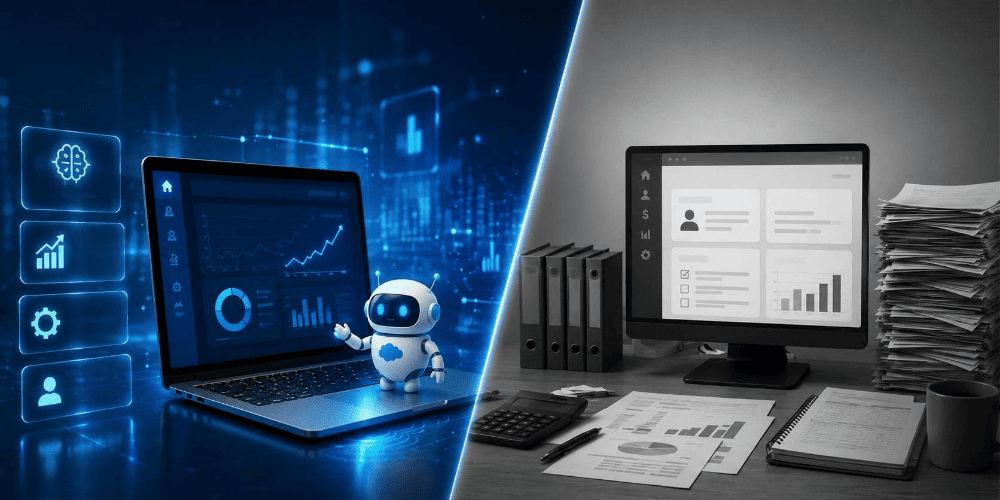
Discover the key differences between AI CRM and traditional CRM systems, and learn how AI is transforming modern business operations through automation, personalization, and intelligent workflows.
Customer expectations are changing rapidly, requiring businesses to respond faster, personalize interactions, and manage customer data more efficiently. Traditional CRM systems helped organize customer information, but modern businesses now need smarter systems that can automate workflows, generate insights, and support real-time decision-making. This is where AI CRM is transforming business operations.
What is Traditional CRM?
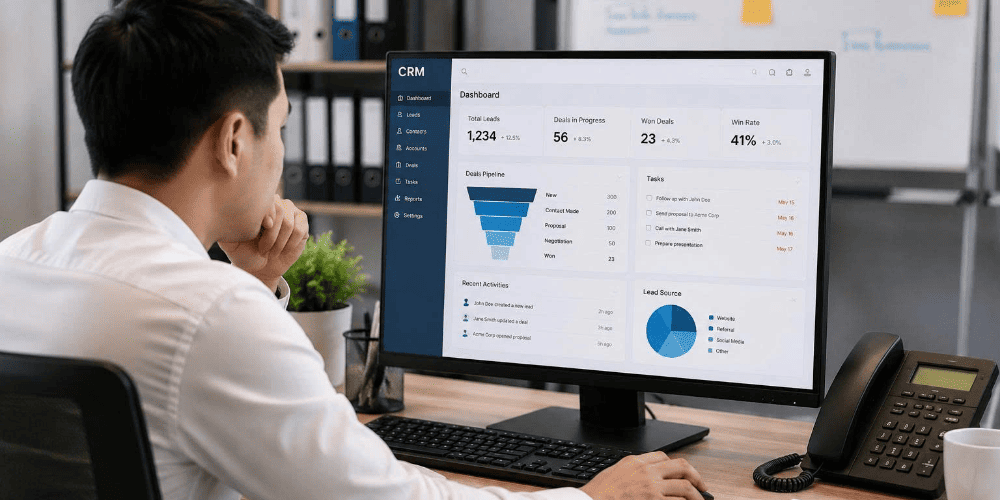
Traditional CRM system to manage customer data and sales activities (Source: Internet)
Traditional CRM (Customer Relationship Management) is a system designed to centralize customer data, sales activities, and interaction history into one platform. It helps businesses manage customer information more systematically by supporting lead tracking, sales pipeline management, task follow-ups, performance reporting, and collaboration between sales, marketing, and customer support teams. Compared to using Excel sheets or disconnected tools, Traditional CRM improves data organization and makes customer management more consistent and efficient.
However, the main limitation of Traditional CRM is that most workflows still rely heavily on manual processes. Sales teams must manually update lead statuses, customer service teams must handle follow-ups themselves, and managers still need to compile reports for performance analysis. As businesses scale, these repetitive tasks become time-consuming and reduce operational efficiency.
Why Chatbots Alone Are Not Enough
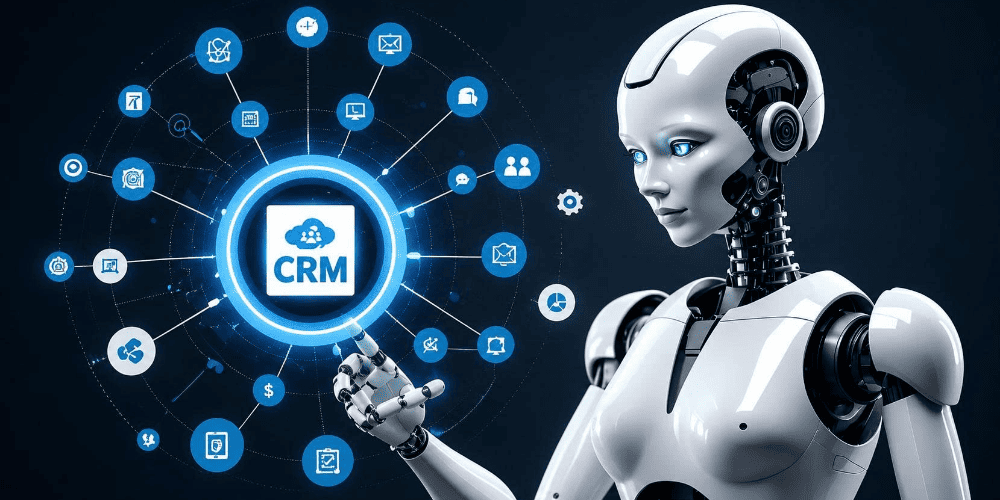
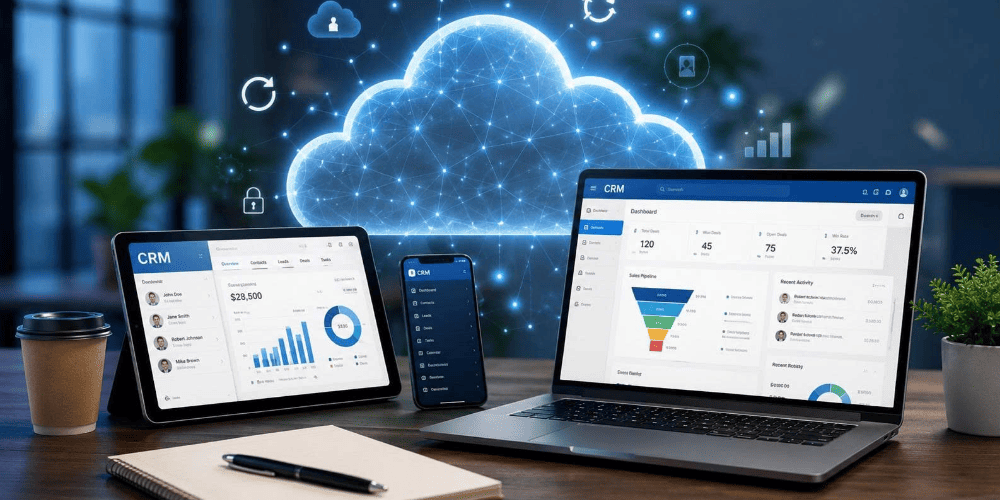
AI-powered CRM system with automation and customer management technology (Source: Internet)
AI CRM is the next generation of CRM that integrates artificial intelligence directly into business operations. While Traditional CRM mainly helps businesses “manage customer data,” AI CRM helps businesses “operate more intelligently” through automation, data analysis, and real-time decision support.
Instead of acting only as a database, AI CRM actively participates in daily business workflows. The system not only stores data but can also understand customer behavior, identify conversion opportunities, and automate repetitive tasks.
AI CRM can:
- Automatically score leads: AI analyzes customer behavior and engagement to identify high-conversion prospects.
- Automate follow-ups and reminders: The system proactively creates reminders or triggers customer care workflows at different stages of the customer journey.
- Analyze customer behavior: AI tracks interactions to identify interests, trends, or churn risks.
- Personalize customer experiences: Content, offers, and care workflows can be tailored for each customer segment.
- Support decision-making: AI provides insights and recommendations that help teams respond faster and more accurately.
Instead of waiting for teams to manually process tasks, AI CRM proactively helps businesses optimize operations and improve customer experience at scale.
Quick Comparison: AI CRM vs Traditional CRM
-
Criteria Traditional CRM AI CRM Data Entry Manual Automated Follow-up Handled by staff Automatically triggered based on behavior Data Analysis Periodic reports Real-time insights Personalization Limited by team capacity Automated at scale Scalability Requires more staff Scales without proportional cost increases Response Speed Depends on employees Instant
Key Differences Between AI CRM and Traditional CRM
1. Manual Operations vs Intelligent Automation
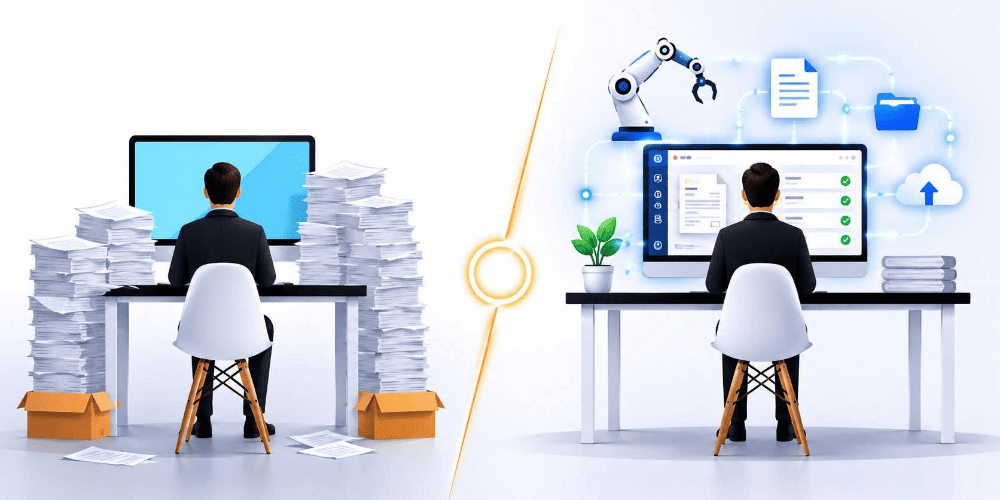
Traditional CRM manual workflows compared with AI-powered business automation systems (Source: Internet)
Traditional CRM still depends heavily on manual work. Sales or customer support teams usually need to input data manually, update customer statuses, create follow-up tasks, and track interaction history. This may work for smaller businesses, but as companies grow, repetitive workloads increase rapidly and reduce operational efficiency.
AI CRM automates many critical workflows, including:
- Automatic follow-up task creation: The system proactively builds customer care workflows instead of relying entirely on staff.
- Data extraction from conversations: AI can pull customer information from emails, chats, or calls to reduce manual input.
- Automated reminders and follow-ups: Workflows are triggered based on customer behavior or pipeline stages.
- Intelligent lead routing: AI can assign leads to the right sales representatives based on performance and data.
As a result, teams can focus more on consulting, customer relationships, and revenue-generating activities rather than repetitive administrative work.
2. Data Storage vs Intelligent Data Analysis
AI CRM platforms using intelligent data analysis to transform customer data into business insights (Source: Internet)
Traditional CRM centralizes customer data into one system, but the data mainly serves as storage. Teams still need to manually analyze dashboards and reports to find insights or evaluate performance.
AI CRM goes further by transforming data into operational insights. The system can:
- Analyze purchase intent: AI identifies interest levels and conversion potential for each lead.
- Track customer behavior and engagement: The system evaluates how customers interact with the business in real time.
- Predict churn risks: AI detects early signs that customers may leave.
- Recommend next actions: Workflows and customer care content are personalized for different customer groups.
This allows businesses to make faster, more accurate decisions and optimize the customer journey more effectively.
3. Reactive Workflow vs Proactive Engagement

AI CRM enables proactive customer engagement through automation, personalized interactions, and real-time customer support (Source: Internet)
Traditional CRM typically operates reactively that means teams respond only when customers send requests, miss appointments, or stop interacting. This can make businesses less proactive in customer engagement and lead to missed conversion opportunities.
AI CRM enables businesses to shift toward proactive engagement. AI systems can:
- Send automated reminders before appointments or important deadlines.
- Re-engage inactive customers automatically when engagement drops.
- Recommend personalized offers based on customer behavior and needs.
- Alert teams about high-priority leads with strong conversion potential.
Maintaining proactive engagement helps businesses improve customer experience, increase response speed, and stay connected throughout the entire customer journey.
4. Mass Communication vs Personalized Experiences

AI CRM delivers personalized customer experiences based on behavior, preferences, and engagement data (Source: Internet)
Modern customers no longer want generic communication or identical customer care processes. They expect businesses to understand their unique needs, behaviors, and preferences.
Traditional CRM can store customer data, but personalization still depends heavily on manual efforts from sales or customer support teams. This makes it difficult to scale personalized experiences as customer volume increases.
AI CRM solves this by analyzing:
- Customer behavior: AI tracks how customers interact with content or products.
- Interaction history: The system understands previous touchpoints throughout the customer journey.
- Preferred communication channels: AI identifies whether customers respond better to email, chat, or phone calls.
- Engagement levels: The system evaluates customer interest and adjusts workflows accordingly.
As a result, businesses can deliver personalized experiences at scale while maintaining operational efficiency.
The Future of CRM Is Intelligent Automation
CRM is evolving beyond simple customer data management into an intelligent operational system powered by AI. Modern businesses now need platforms that can automate workflows, deliver real-time insights, improve customer experiences, and support scalable growth. As a result, AI CRM is becoming a core part of digital transformation and operational efficiency.
Traditional CRM helped businesses organize customer information, but AI CRM goes further by bringing automation, intelligence, and proactive engagement into daily operations. Companies that adopt AI CRM early can gain advantages in speed, customer engagement, and long-term scalability.
At Lifesup AI, we help businesses build AI-powered operational systems that streamline workflows, improve customer experiences, and support smarter business growth through intelligent automation.
>>Read more: 5 Outstanding Benefits of AI CRM for Business Growth