
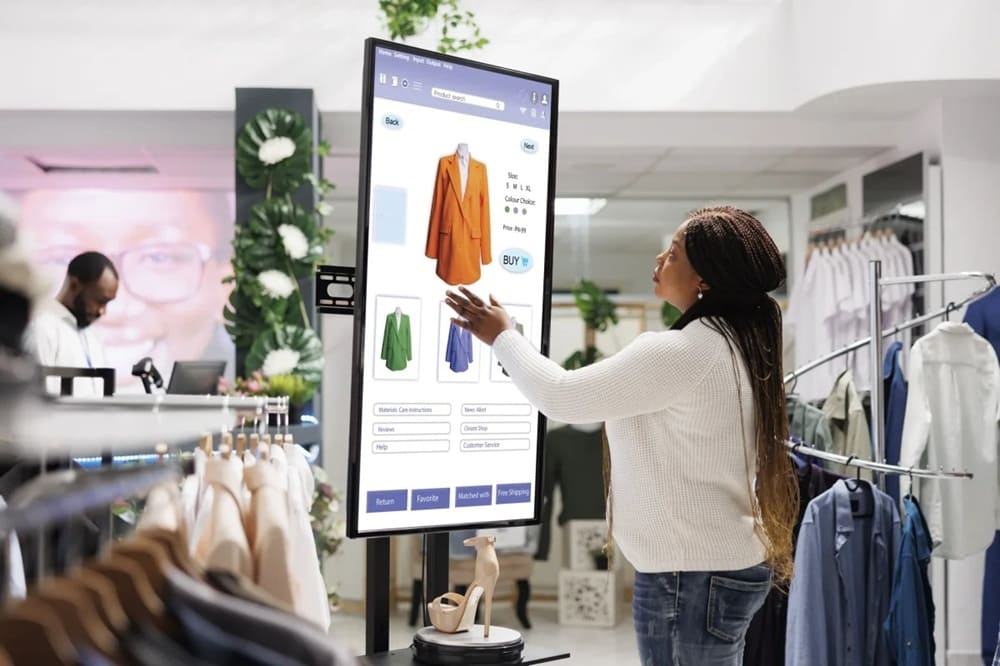
The retail industry is entering an era where data is more valuable than physical shelf space. Consumer behavior has become dynamic, omnichannel journeys are now the norm, and operational efficiency determines competitive survival. In this context, AI in retail stores is no longer an experimental initiative – it is a structural transformation strategy.
The integration of artificial intelligence in retail enables businesses to predict customer demand, automate complex operations, and deliver more effective customer experiences. Global pioneers such as Amazon and Walmart have demonstrated that AI is not simply a technology layer; it is a revenue engine and an operational optimizer.
This guide provides a comprehensive A–Z perspective on how AI reshapes retail stores, from foundational technologies to practical deployment strategies.
Overview of AI in the retail industry
Retail generates enormous volumes of transactional, behavioral, and logistical data every second. Traditional analytics tools struggle to process this data in real time. Artificial intelligence changes that equation. The role of AI in retail stores extends across the entire value chain – from customer acquisition and engagement to inventory management and revenue forecasting.
In reality, AI is gradually becoming one of the core technologies in the retail industry. According to a report by McKinsey & Company, the application of AI can significantly improve operational efficiency, optimize supply chains, and enhance customer experiences through real-time data analysis.
In addition, the adoption of AI in retail is accelerating globally. According to various industry reports, around 45% of retailers worldwide have implemented AI solutions in their business operations, a significant increase from approximately 22% in 2020.
At the same time, another survey indicates that 73% of retail executives plan to increase their AI investment budgets in the coming years, particularly in areas such as customer data analytics, demand forecasting, and supply chain optimization.
Key AI Technologies Used in Retail Stores
The impact of AI in retail stores is powered by a combination of advanced technologies working cohesively.
Machine Learning (ML)
Machine Learning enables systems to learn from historical sales data, customer preferences, and operational performance. Over time, algorithms refine recommendations, improve demand forecasts, and enhance fraud detection accuracy.
Computer Vision
Computer vision transforms in-store cameras into intelligent analytical tools. Instead of merely recording footage, AI interprets visual data to monitor shelf stock levels, detect unusual behaviors, and power automated checkout systems.
Natural Language Processing (NLP)
Natural Language Processing (NLP) allows virtual assistants and chatbots to understand and respond to customer inquiries with contextual accuracy, enabling conversational commerce at scale.
Predictive Analytics
Predictive analytics leverages historical and real-time data to anticipate sales trends, seasonal demand fluctuations, and supply chain disruptions.
Generative AI
Generative AI enhances productivity by automatically creating product descriptions, marketing content, campaign messaging, and internal documentation – reducing manual workload while maintaining brand consistency.
Together, these technologies form the operational backbone of artificial intelligence in retail.
Key AI Applications in Retail Stores
AI in retail stores is driving major innovations across the retail industry. Here are some key applications.
Personalized Shopping Experiences
Personalization is one of the areas where AI demonstrates the most visible impact in the retail industry. Modern consumers no longer want generic recommendations; they expect product suggestions that truly match their needs, preferences, and behaviors.
To achieve this, AI analyzes multiple data sources, including:
- Purchase history
- Browsing behavior
- Demographic insights
- Engagement patterns
For example, Amazon’s recommendation engine dynamically suggests products aligned with user interests, illustrating how AI in retail stores can increase cross-selling efficiency and boost average order value.
A practical scenario illustrates this clearly:
Another practical example can be seen in the fashion industry. AI systems can recommend clothing that best fits a customer’s body shape as well as accessories that complement their outfit. The algorithm analyzes several factors, including:
- Body shape
- Color coordination between products
- Current fashion trends
- The customer’s previous purchase history
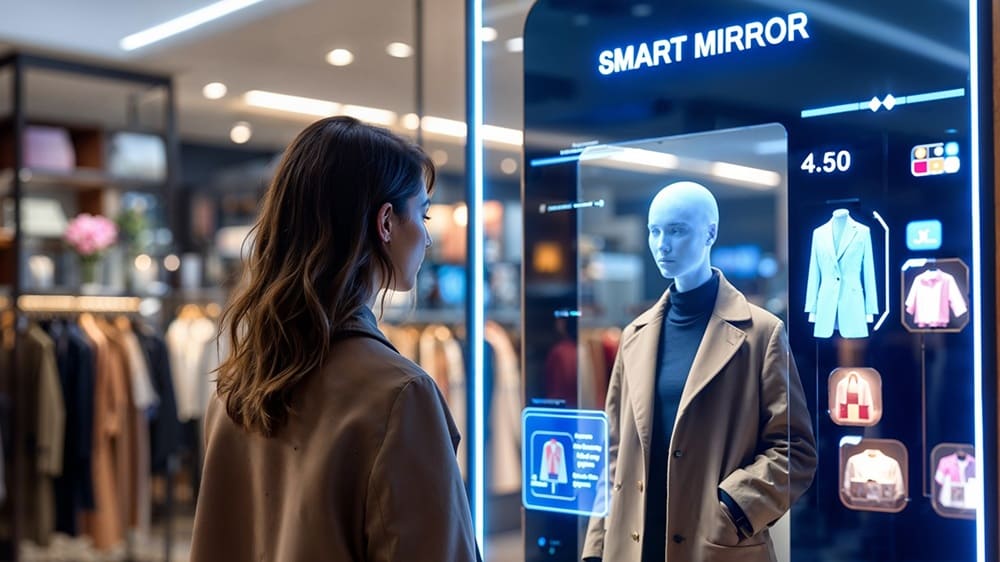
As a result, customers not only find the products they are looking for but also receive highly personalized recommendations, creating a shopping experience that feels tailored specifically to each individual.
Visual Search & Image Recognition
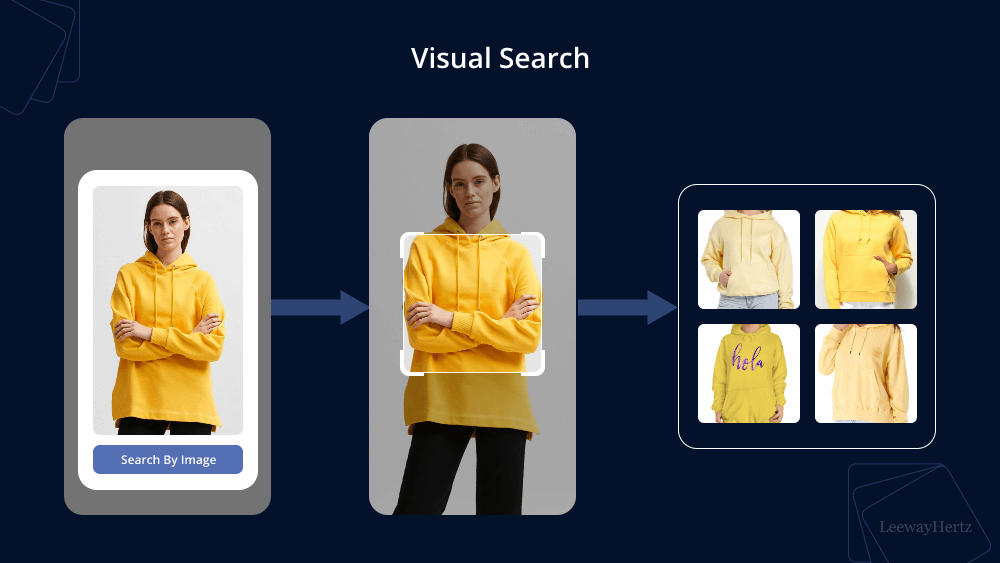
Consumers increasingly discover products visually rather than through text queries. AI-powered visual search enables customers to upload images and instantly locate similar items.
Computer vision algorithms analyze:
- Shapes
- Patterns
- Textures
- Colors
This is particularly valuable in fashion, home décor, and lifestyle retail segments. By eliminating friction in the search process, AI in retail stores enhances user experience while improving conversion rates.
AI Virtual Assistants for Sales & 24/7 Customer Support
Retailers now operate in an always-on digital environment. AI assistants ensure customer queries are addressed instantly.
Integrated across websites, mobile apps, and platforms within ecosystems such as Meta, these virtual agents handle:
- Order tracking
- Product inquiries
- Return processes
- Policy clarification
Beyond reducing operational costs, AI assistants improve responsiveness and maintain service consistency across channels.
Inventory & Supply Chain Optimization
Inventory misalignment is one of retail’s most expensive inefficiencies. Overstocking ties up capital, while stockouts result in lost sales.
AI-driven forecasting models analyze:
- Historical sales data
- Seasonal patterns
- Regional demand
- External market signals
By deploying AI in retail stores, businesses can optimize stock allocation, reduce warehousing costs, and improve inventory turnover rates, ultimately enhancing overall operational efficiency.
Brands like Zara have leveraged data-driven supply chains to react quickly to trend shifts, minimizing waste while maintaining agility.
Dynamic Pricing
Price sensitivity fluctuates based on demand, competition, and timing. AI enables dynamic pricing strategies that respond in real time.
Algorithms continuously evaluate:
- Competitor pricing
- Inventory levels
- Customer demand elasticity
- Market conditions
This ensures revenue optimization without compromising competitiveness.
Automated Checkout
One of the most transformative innovations in physical retail is automated checkout.
The concept, popularized by Amazon Go, utilizes computer vision and sensor fusion to enable a “grab-and-go” experience.
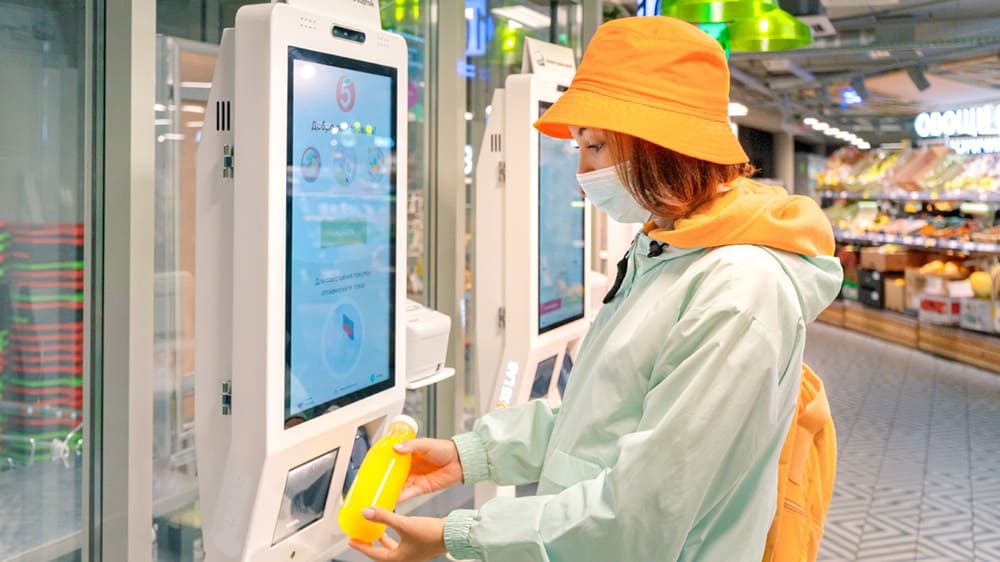
Customers enter, select items, and leave without standing in line. AI systems automatically detect purchases and process payments.
This model improves:
- Customer convenience
- Labor allocation efficiency
- Store throughput capacity
Fraud Detection & Security
Retail environments are vulnerable to transactional fraud and internal losses. AI mitigates these risks by identifying anomalies in real time.
When purchasing patterns deviate from established behavior, AI in retail stores systems flag potential fraud for review. This proactive approach reduces financial losses and strengthens customer trust.
AI-Driven Marketing
Artificial intelligence in retail enhances marketing precision by segmenting audiences automatically.
Instead of generic campaigns, AI generates:
- Personalized email promotions
- Targeted advertising segments
- Optimized budget allocation strategies
By aligning messaging with individual behavior, retailers increase engagement and improve ROI.
Generative AI for Retail Operations
Generative capabilities within AI in retail stores accelerate content production and operational workflows.
Retail teams can instantly generate:
- SEO-optimized product descriptions
- Campaign copy
- Social media captions
- Internal reports
This enhances productivity while maintaining consistent brand voice across channels.
Sales Analytics & Forecasting
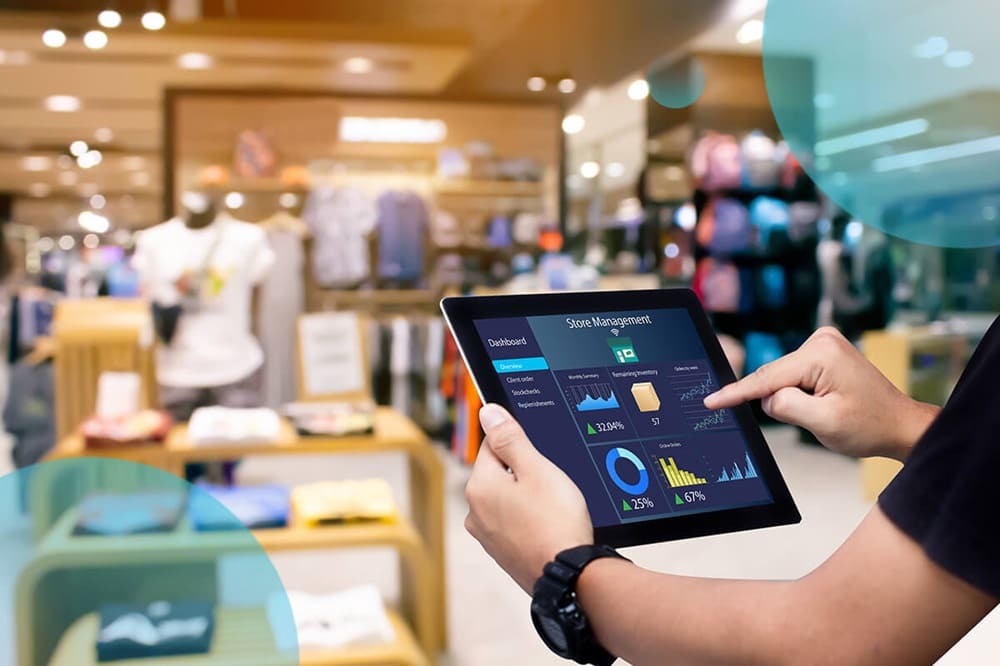
AI-powered analytics platforms convert historical and real-time data into predictive insights.
Retailers can anticipate:
- Revenue fluctuations
- Seasonal demand peaks
- Product performance trends
Accurate forecasting enables strategic planning and reduces financial uncertainty.
>> Read more: Generative AI in Retail: Key Benefits and Real-World Use Cases
Advantages and Disadvantages of Applying AI in Retail Stores
Before implementing AI in retail stores, businesses should evaluate both its advantages and potential challenges.
Advantages
- Elevated operational efficiency
- Enhanced personalization at scale
- Real-time decision-making capabilities
- Cost optimization
- Stronger competitive positioning
Disadvantages
- Significant initial investment
- Integration complexity with legacy systems
- Data privacy considerations
- Need for AI expertise
A strategic implementation roadmap ensures the long-term benefits of artificial intelligence in retail outweigh its challenges.
How Businesses Can Effectively Start Applying AI in Retail Stores
Successfully adopting AI in retail requires a clear strategy and a structured implementation roadmap. Businesses can start by following these key steps:
Step 1: Define Clear Business Objectives
Begin by identifying specific and measurable goals. Whether the aim is to improve conversion rates, enhance customer experience, or reduce inventory waste, AI initiatives should align closely with core business KPIs.
Step 2: Assess Data Readiness
Evaluate the quality and accessibility of existing data. Clean, well-integrated, and structured data is essential for AI in retail stores to generate accurate insights and deliver effective results.
Step 3: Launch Pilot Projects
Start with small-scale AI applications such as chatbots for customer support or predictive models for inventory management. Pilot projects help businesses test feasibility and measure ROI before expanding implementation.
Step 4: Collaborate with AI Solution Providers
Partner with experienced technology providers to ensure smooth deployment, system integration, and long-term optimization of AI solutions. Businesses can also consider reputable AI solution providers such as Lifesup AI to accelerate implementation and maximize results.
A phased approach minimizes risk while maximizing strategic value.
Comprehensive AI Solutions for Retail Stores by Lifesup.ai
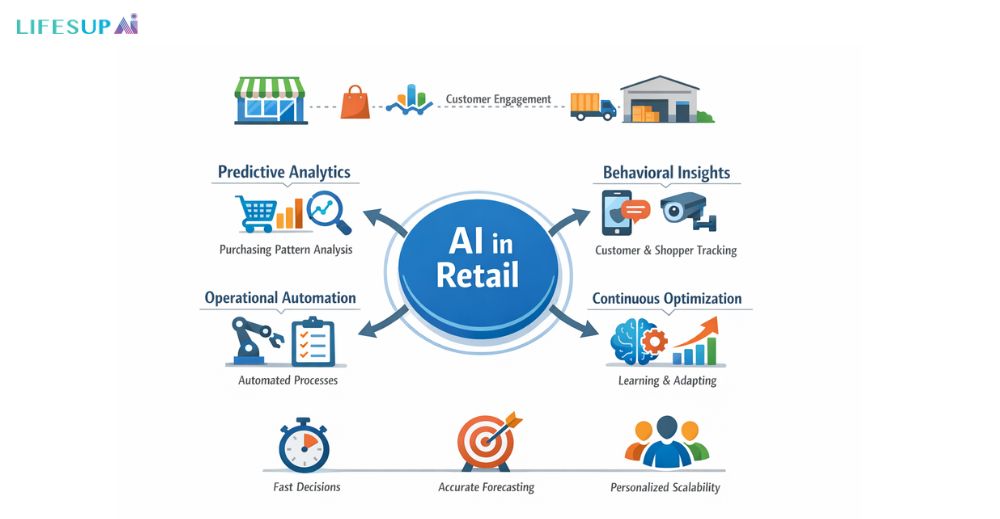
Lifesup.ai provides a comprehensive AI ecosystem designed for retail businesses, enabling organizations to accelerate digital transformation in an efficient and sustainable way. With powerful data analytics and intelligent automation capabilities, Lifesup.ai helps businesses optimize operations, enhance customer experiences, and drive revenue growth.
Lifesup AI offers powerful AI for retail capabilities, including:
- AI-powered sales forecasting to accurately predict market demand
- Smart customer segmentation based on behavioral and purchasing data
- AI chatbots for sales support that operate 24/7 to improve customer experience
- Inventory optimization tools that reduce waste and maximize stock efficiency
- Content automation with Generative AI to quickly produce consistent marketing content
- Real-time data analytics dashboards that support faster and more informed decision-making
Retail is evolving rapidly. Businesses that harness AI gain not only operational efficiency but also strategic foresight.
With Lifesup.ai, retailers can turn data into actionable insights and scale intelligent automation across their operations. Start transforming your retail strategy with Lifesup AI today and unlock the full potential of AI-driven growth.
>> Read more: The Benefits and Key Applications of AI digital marketing 2026